

Authors:
Felicitas Colombo , MPA
Dr. Enrique Chacon-Cruz , M.D., MSc
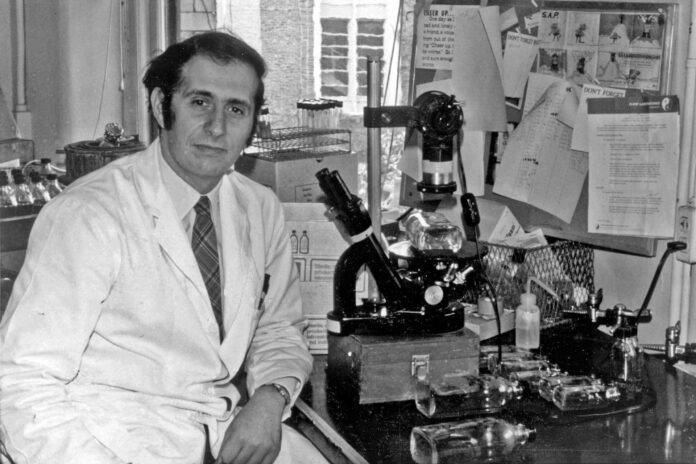
In the world of vaccinology, Prof. Stanley A. Plotkin needs no introduction. Widely regarded as one of the leading figures in vaccine science, his groundbreaking research has helped shape modern vaccinology and advance global immunization for more than six decades.
Prof. Plotkin played a pivotal role in the development of the rubella vaccine, which is used worldwide, and made major contributions to the development of vaccines against a range of infectious diseases, including polio, rabies, varicella, rotavirus, and cytomegalovirus. His distinguished career has spanned academic research, clinical practice, and industry, including senior positions at the Wistar Institute in Philadelphia, the Children’s Hospital of Philadelphia, the University of Pennsylvania, and Pasteur-Mérieux-Connaught, now part of Sanofi.
He is currently Emeritus Professor of Pediatrics at the University of Pennsylvania and Adjunct Professor at Johns Hopkins University. He has also served in prominent advisory roles with leading scientific and public health institutions, including the American Academy of Pediatrics, the Advisory Committee on Immunization Practices (ACIP), and the National Institutes of Health.
Another of Prof. Plotkin’s enduring legacies is Plotkin’s Vaccines, first published in 1988. As longtime editor of this landmark textbook, he has helped establish it as one of the most authoritative references in vaccinology, offering an extensive resource on vaccine science, development, and clinical application. He has authored or co-authored hundreds of scientific publications and helped establish the Advanced Course of Vaccinology at Fondation Mérieux in Annecy, France.
His influence extends beyond scientific discovery. In 2015, he proposed an international mechanism to support the development of vaccines against emerging infectious diseases, an initiative that contributed to the creation of the Coalition for Epidemic Preparedness Innovations (CEPI). His contributions have been recognized through numerous distinctions, including the French Legion of Honor, the Sabin Gold Medal, the Hilleman Award, and the Fleming Award. He has also been elected to several prestigious scientific institutions, including the U.S. National Academy of Medicine.
A founding figure in pediatric infectious diseases and a tireless advocate for vaccine research, Prof. Plotkin has helped shape not only the vaccines available today but also the scientific foundations on which future advances will depend. His remarkable legacy reflects a lifelong commitment to scientific rigor, innovation, and the protection of public health worldwide.
It was an honor to once again have an hour of his precious time for a conversation with Vaccines Beat.
A broader understanding of vaccine-induced protection
Few scientists have witnessed and influenced the evolution of modern vaccinology as extensively as Prof. Plotkin. Over a career spanning more than six decades, his work has helped shape the scientific foundations of vaccine development and the understanding of immune protection.
In this conversation with Vaccines Beat, Prof. Plotkin reflects on how the field has evolved beyond its traditional reliance on antibody neutralization tests, why mucosal immunity represents a critical frontier, and how vaccine safety, education, and public trust will influence the future of immunization.
For Prof. Plotkin, one of the most important scientific developments has been the recognition that vaccine-induced protection cannot always be captured by a single laboratory measurement.
“When I first started out, the test was neutralization,” he recalls.
Traditionally, researchers assessed whether antibodies could neutralize a pathogen under laboratory conditions. Today, however, the understanding of immune protection encompasses a wider range of antibody functions, cellular responses, and other mechanisms.
“The neutralization test that we have used for many years is only one way of determining whether an immune response has occurred,” he emphasizes.
This distinction is important because preventing a pathogen from infecting a cell, limiting its replication, and preventing the disease it causes are related but different outcomes. A vaccine may protect an individual against severe illness without completely preventing infection.
Consequently, understanding protection requires a more comprehensive assessment of the immune response, including its quality and functionality, rather than relying exclusively on antibody concentrations or neutralization measurements. This broader approach is consistent with Plotkin’s longstanding work on immune correlates of protection.
Mucosal immunity: Protecting the body at the point of entry
Among the most compelling challenges facing vaccinology is the development of vaccines capable of establishing effective immunity at mucosal surfaces.
Many infectious agents first encounter the body through the respiratory tract, gastrointestinal system, or genital mucosa. Yet, as Prof. Plotkin explains, conventional vaccination has generally been more successful at generating systemic immunity than at preventing pathogens from establishing themselves at these entry points.
This limitation has important implications for respiratory and enteric infections. A vaccine that protects against severe disease may not necessarily prevent the initial infection, viral or bacterial replication at the mucosal surface, or subsequent transmission.
For this reason, Prof. Plotkin identifies the induction of mucosal immunity as one of the field’s main priorities.
Mucosal immunity involves a complex interaction of local antibodies, including immunoglobulin A (IgA), cellular immunity, and the specialized immune environment of mucosal tissues. Developing vaccines that reliably stimulate these responses remains challenging, particularly when researchers must establish how to measure those responses at the site of infection.
The challenge is not simply to generate a local immune response. A successful vaccine must also prevent the pathogen from crossing the mucosal barrier and spreading into the body. The objective is to achieve mucosal protection while ensuring that the vaccine itself does not cause disease.
“The main issues for the mucosal vaccines are the ability to induce an immune response that blocks invasion,” he says.
This balance presents both a scientific and a regulatory challenge. Vaccine developers must demonstrate that a candidate can induce an appropriate protective response without unacceptable replication, dissemination, or other safety risks.
The implications extend beyond the development of intranasal or oral vaccines. They also raise broader questions about how vaccine efficacy should be evaluated when the desired outcome includes preventing infection and transmission, rather than primarily reducing severe disease.
Pertussis: preventing disease and preventing infection
The discussion of mucosal immunity leads to a particularly relevant example: the evolution from whole-cell to acellular pertussis vaccines.
Whole-cell pertussis vaccines have historically been associated with greater reactogenicity, contributing to the development and adoption of acellular alternatives with more favorable tolerability profiles. However, the two vaccine approaches do not generate identical immune responses.
“The efficacy of the whole-cell vaccine is better than the efficacy of the acellular vaccine because the latter does not induce T cell responses as well as the whole-cell vaccine,” Prof. Plotkin explains acknowledging the trade-offs involved in this transition.
He adds that infection can still occur at the mucosal surface even when an individual is protected against clinical disease. This distinction has been examined in research on pertussis, including studies suggesting that acellular vaccines can protect against disease without preventing colonization and transmission as effectively as whole-cell vaccines in animal models.
The issue is particularly important when considering indirect protection. If vaccination reduces disease severity but does not consistently prevent infection or transmission, the population-level effects may differ from those achieved by vaccines that more effectively interrupt transmission.
The pertussis example therefore illustrates a broader principle: protection against disease and protection against infection are not interchangeable endpoints.
For vaccine developers, regulators, and public-health authorities, recognizing this distinction is essential when defining the objectives of next-generation vaccines and assessing their potential contribution to population-level protection.
Beyond a single correlate of protection
As vaccine technologies become more sophisticated, Prof. Plotkin believes that the assessment of immunity must reflect the complexity of the immune system itself.
A single biomarker may be useful for predicting protection in a particular setting, but it may not capture every mechanism required to control a pathogen.
At mucosal surfaces, local antibodies may help prevent initial infection. If a pathogen crosses that barrier, circulating antibodies and cellular responses may become important in limiting further replication and disease.
“The critical thing is induction of the immune system in general, as well as on the surface of the mucosa,” he says.
This approach has implications for clinical development and regulatory evaluation. Researchers need to determine which immune responses are genuinely associated with protection, which serve as useful surrogate measurements, and how different components of immunity interact.
Plotkin’s work on correlates of protection has long emphasized the importance of antibody functionality, immune memory, and cellular immunity alongside antibody measurements.
As new platforms and vaccine candidates emerge, a more complete understanding of these mechanisms may help researchers select antigens, design trials, interpret results, and establish more meaningful measures of protection.
Vaccine safety: An ethical obligation, not simply a statistical calculation
Beyond scientific innovation, Prof. Plotkin identifies vaccine safety as a continuing responsibility for the vaccinology community.
His argument is not that vaccines lack a strong safety record. Rather, it is that the scientific and ethical obligations associated with vaccination require sustained attention to rare adverse reactions, even when the overall benefits of vaccination are substantial.
He explains that the issue has two dimensions. First, researchers have an ethical obligation to understand and prevent harm wherever possible. Second, rare adverse reactions can influence public confidence and affect the willingness of others to be vaccinated.
“From the point of view of a single vaccinee, it’s him or her that counts,” he underscores.
This perspective highlights the importance of investigating the biological mechanisms underlying rare adverse events, strengthening post-authorization surveillance, and communicating findings transparently.
The World Health Organization (WHO) similarly emphasizes the importance of continuous vaccine-safety monitoring, expert assessment of potential adverse events, and evidence-based communication when safety concerns arise.
For Prof. Plotkin, safety and efficacy must remain complementary priorities.
“We need to spend more effort on vaccine safety as well as efficacy,” he says.
This is a central lesson for the next generation of vaccinologists: rigorous safety science is essential not only to protect individuals but also to sustain confidence in immunization programmes.
Public trust begins with education
Scientific advances alone cannot guarantee high vaccination coverage. Their impact depends, in part, on whether people understand the benefits and limitations of vaccination and trust the institutions responsible for recommending, evaluating, and delivering vaccines.
Prof. Plotkin is concerned that public perceptions of vaccination have increasingly emphasized individual benefit at the expense of collective protection.
He recalls a time when vaccination was more readily understood as a way to protect both oneself and others. Today, he argues, that shared responsibility is more difficult to communicate.
“It’s more and more whether it’s good for me or not,” he sustains.
The challenge is particularly significant when vaccines are expected to prevent not only disease in the vaccinated individual but also, where supported by evidence, infection and transmission within communities.
Prof. Plotkin returns repeatedly to education, especially during childhood.
“I think that the only way to deal with this situation is to teach children about vaccines,” he says with the wisdom of a physician who has seen it all.
He believes that explaining why vaccines are administered, what benefits they provide, and why mild reactions such as a sore arm may occur can help children develop a better understanding of immunization before they encounter the more polarized debates that often characterize adult discussions.
He also supports stronger education about vaccinology within medical training. The ability of healthcare professionals to explain vaccine science clearly is particularly important when they must address questions about safety, effectiveness, and the rationale for recommended schedules.
Education, however, must be accompanied by practical improvements in vaccination delivery. Prof. Plotkin highlights combination vaccines as one opportunity to reduce the number of injections required.
“Making combination vaccines is a task … important not simply for the vaccinator, but for the vaccinee,” he explains.
Reducing the number of injections may make vaccination more acceptable and convenient for families and healthcare professionals while supporting the timely completion of recommended schedules.
His broader message is that public acceptance should be considered alongside scientific progress, not treated as an afterthought once a vaccine has been developed.
The future of vaccinology: Science, ethics and responsibility
Looking ahead, Prof. Plotkin expects vaccine science to continue expanding, including the development of vaccines against diseases that have historically been difficult to prevent.
“Vaccine science is increasing, that as time goes on, there will be more and more vaccines, including vaccines against cancer,” he anticipates.
Such progress will create new opportunities, but it will also increase the importance of explaining why new vaccines are needed, establishing their safety and effectiveness, and ensuring that people can make informed decisions about their use.
For emerging vaccinologists, his advice is grounded in scientific rigor and ethical responsibility. Researchers must understand the protective responses a vaccine induces while also identifying responses that may be harmful or unrelated to the intended protection.
“They must also recognize that rare adverse reactions deserve careful investigation, even when a vaccine provides substantial benefits to the population as a whole,” he advises.
Ultimately, Prof. Plotkin’s reflections point to a future in which the success of vaccinology will depend on more than technological breakthroughs. It will require a deeper understanding of immune protection, better tools for evaluating vaccines, sustained investment in safety research, and more effective public education.
“The scientific community must continue to ask not only whether a vaccine works, but how it works, whom it protects, what risks it may carry, and how its benefits can be understood and trusted by the people who need it,” he says, underlining that these questions are inseparable from the ethical responsibilities of vaccine development.
As vaccinology advances toward a more sophisticated understanding of immune protection, Prof. Plotkin argues that the next generation of vaccines must do more than generate antibodies. They must address immunity at the site of infection, strengthen our understanding of rare adverse reactions, and ensure that the public understands why vaccination matters.
“The future of immunization will depend on our ability to translate scientific knowledge into protection that is not only effective and safe, but also understood and accepted by society,” he concludes.