
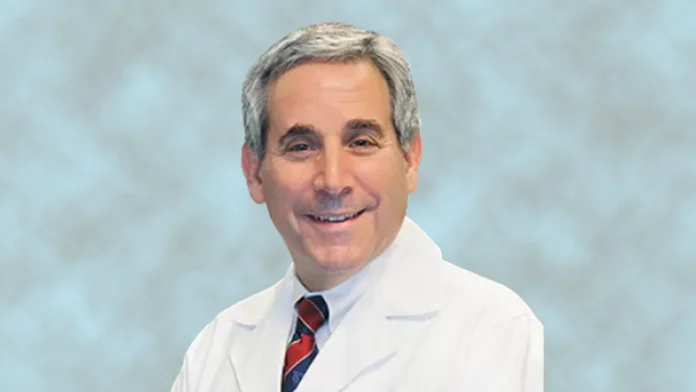
Dr. Sheldon L. Kaplan is Professor of Pediatrics at Baylor College of Medicine in Houston, Texas, where he served as Head of the Section of Infectious Diseases in the Department of Pediatrics from 2008 to 2023 and Chief of the Infectious Disease Service at Texas Children’s Hospital from 1981 to 2023.
A Missouri native, Prof. Kaplan earned his medical degree from the University of Missouri-Columbia School of Medicine. He completed his pediatric residency and a fellowship in Pediatric Infectious Diseases at St. Louis Children’s Hospital and Washington University School of Medicine. He is board certified in both Pediatrics and Pediatric Infectious Diseases.
Prof. Kaplan’s research focuses on serious pediatric infections, particularly those caused by Streptococcus pneumoniae, Staphylococcus aureus, and Neisseria meningitidis. He is actively involved in evaluating new antibiotics for children with infections due to drug-resistant bacteria.
A prolific contributor to the field, Prof. Kaplan has authored over 250 peer-reviewed articles and more than 140 invited publications, including book chapters and reviews. He has co-edited the 5th through 9th editions of Feigin and Cherry’s Textbook of Pediatric Infectious Diseases, and currently serves as Editor-in-Chief of Pediatrics and Co-Editor of the Pediatric Infectious Diseases section for UpToDate®.
Prof. Kaplan is a Past President of the Pediatric Infectious Diseases Society and has held key roles with the U.S. Food and Drug Administration and the American Board of Pediatrics, including chairing the Subboard of Pediatric Infectious Diseases.
He has received numerous accolades for his leadership and dedication to education, including the Arnold J. Rudolph Baylor Pediatric Award for Lifetime Excellence in Teaching (2011), the Distinguished Award for Education from the European Society for Paediatric Infectious Diseases (2019), the Distinguished Physician Award from the Pediatric Infectious Diseases Society (2019) and the Award for Lifetime Contribution to Infectious Diseases Education from the Section on Infectious Diseases, American Academy of Pediatrics (2023). In recognition of his career and contributions, an Endowed Chair in his name has been established in the Department of Pediatrics at Baylor College of Medicine.
Vaccine hesitancy and its consequences
While some countries enforce mandatory vaccination policies, others allow exemptions based on a broader range of criteria. Previously, exemptions were typically limited to medical contraindications or documented religious beliefs. However, in recent years, personal belief exemptions—often based on non-scientific or loosely defined reasons—have become more common. This shift has led to geographic clusters of unvaccinated children, increasing the risk of vaccine-preventable disease outbreaks.
Despite decades of robust data confirming the safety and effectiveness of vaccines, vaccine hesitancy and refusal persist in certain groups. Religious objections and concerns about vaccine safety remain two of the most cited reasons for opting out of vaccination.
A significant turning point in the modern anti-vaccine movement, according to Prof. Kaplan, was the now-discredited claim linking the MMR (measles, mumps, rubella) vaccine to autism. This claim, originally published by Dr. Andrew Wakefield in The Lancet, was later retracted, but its impact continues to influence public perception. Another common concern among hesitant parents is the idea that administering multiple vaccines simultaneously might overwhelm a child’s immune system.
“We know that from almost every scientific study that’s been done, that these vaccines are studied carefully. They’re safe and effective,” says Prof. Kaplan. To help parents understand the importance of vaccination, he often discusses the serious potential consequences of vaccine-preventable diseases. For example, pneumococcal meningitis—a condition preventable through vaccination—can lead to long-term complications, including hearing loss.
Prof. Kaplan emphasizes the goal of preventing pneumococcal infection and reassures parents that the pneumococcal vaccine is both safe and highly effective. Beyond protecting against invasive disease, it can also reduce the risk of conditions like acute otitis media and possibly acute sinusitis. “There are many benefits to the vaccine,” he notes, “with virtually no risk of adverse effects.”
The Internet and misinformation
The internet has given a platform to individuals without medical credentials to speak with unwarranted authority on important health issues—often with serious consequences. Under the guise of promoting science, many use this space to share personal opinions or unverified claims, lacking the medical expertise necessary to guide public understanding.
Today, physicians often encounter patients who have searched the internet extensively, arriving at medical appointments with preconceived notions, self-diagnoses, and misinformation. This trend complicates the patient-physician relationship and undermines evidence-based guidance.
“So, without a doubt, the internet is a major factor in vaccine hesitancy,” Prof. Kaplan concludes.
Vaccine miracles
Despite overwhelming scientific and historical evidence that vaccines represent one of the greatest breakthroughs in preventing serious infectious diseases in both children and adults, Prof. Kaplan observes a growing distrust in the medical community and science more broadly.
He cites Haemophilus influenzae type b (Hib) as a striking example of the transformative power of vaccines. “Before the H flu type b vaccine in our hospital, Texas Children’s Hospital, it would not have been uncommon to have two or three kids admitted every single night with H flu meningitis, H flu septic arthritis, maybe an epiglottitis. We used to have 150 kids a year admitted with invasive H flu type b disease,” he recalls.
The introduction of the conjugate Hib vaccine in the early 1990s changed everything.
In the case of measles, emergency departments in children’s hospitals were once common sites of exposure. A child presenting with fever could sit in a waiting room with others before measles was even suspected—putting many others at risk.
Prof. Kaplan encourages families to speak with their pediatricians or family physicians and to seek information from reliable sources. He highlights the American Academy of Pediatrics (AAP) as a trusted resource, noting that the Red Book—the AAP’s authoritative guide on over 200 pediatric infectious diseases—has, for the past five years, included guidance on how healthcare providers can effectively communicate with vaccine-hesitant families. He emphasizes the importance of educating parents about the real risks of these diseases as a critical priority.
Are doctors losing the battle against anti-science?
One challenge in the fight against misinformation is that physicians are not typically trained as communicators. As a result, their ability to effectively convey complex scientific concepts may be limited—leaving space for misinformation to take hold and spread within public discourse.
“When someone asks us about how good vaccines are, we show data. They don’t care about the data. They don’t even understand the data,” Prof. Kaplan wonders. “It really is mysterious. I don’t quite understand it.” His observation underscores a growing disconnect between scientific evidence and public perception.
To address this divide, Prof. Kaplan believes there is a pressing need for improved communication strategies, stronger political will, and enhanced international cooperation.
The public health costs of vaccine-preventable diseases are also significant. Every illness requires resources for treatment, contact tracing, and containment—expenses that could be avoided with widespread immunization.