

by Rebecca C. Christofferson, PhD
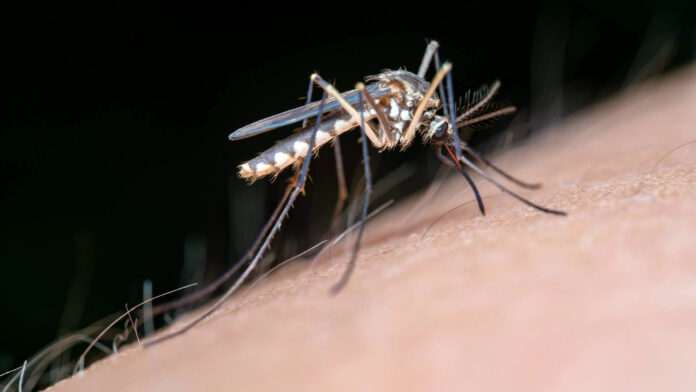
Dengue virus (DENV) represents one of the most significant hurdles to global health security. Increasingly driven by urbanization, climate change, and the expansion of permissive ecologies for its vectors (Aedes aegypti and Aedes albopictus mosquitoes) DENV outbreaks are becoming more frequent, widespread, and difficult to predict. Historical successes in reducing mosquito populations through larval source reduction, insecticide spraying, and community engagement have yielded measurable successes against transmission. However, reliance on vector control alone is increasingly strained by insecticide resistance, urban infrastructure challenges, and the limits of public health capacity. To move from reactive crisis response to proactive outbreak prevention, we must augment traditional tools with two more complementary interventions: predictive modeling and vaccination.
Mathematical models have become powerful tools for helping us understand and plan for DENV outbreaks. These models use real-world data streams from a myriad of courses, such as weather patterns, mosquito surveillance data, and human demography and mobility to estimate how and where the virus might spread. Some models focus on big-picture trends, like what might happen if a new vaccine is introduced, while others zoom in on specific scenarios to see how outbreaks might unfold. For instance, in Miami, models have shown that the timing and location of even a single infected person arriving (especially when mosquito numbers are high) can make the difference between an outbreak occurring at all, an outbreak being relatively minor, or an outbreak becoming a big public health threat. Even beyond predicting where and when outbreaks might happen, models are useful for testing what different strategies, like vaccination or mosquito control, might actually achieve. For example, models can show that even when a DENV vaccine coverage isn’t perfect, combining it with even modest mosquito control can make a real difference in lowering transmission. These kinds of models help public health officials make informed decisions, especially when resources are tight and timing matters.
Of course, models are only as good as the data they use. Models need accurate information about how the virus spreads, how mosquitoes behave, and how people interact with both. Unfortunately, there are still important gaps in this data. A recent review found that more than 90% of mosquito-virus combinations haven’t been tested in the lab at all (Carlson et al, 2023). Closing these gaps by improving how we connect lab findings to real-world disease modeling is key to making predictions more useful.
Vaccination: A Vital Tool, But Not the Only One
Vaccines are among the most powerful tools for long-term dengue prevention, but their development and implementation have faced significant challenges. Dengvaxia, the only currently licensed DENV vaccine to date, is recommended solely for individuals with prior dengue infection due to an elevated risk of severe disease in dengue-naïve recipients. As a result, pre-vaccination screening is required to confirm prior exposure, an added layer of complexity that has hindered deployment, particularly during outbreaks in areas like Puerto Rico, where perceived risk is low and access to rapid diagnostics is limited.
Recently, Sanofi announced that it will discontinue production of Dengvaxia. However, other candidates are advancing. Takeda’s live attenuated vaccine, already licensed in multiple countries and recommended by WHO for children aged 6-16 in high-transmission areas, offers protection regardless of prior exposure. Merck is currently evaluating a similar live attenuated candidate in Phase 3 trials.
Modeling studies underscore the importance of incorporating even moderately efficacious vaccines into outbreak mitigation strategies. While no vaccine is perfect, models show that combining immunization with vector control can significantly reduce transmission, particularly when deployed strategically in space and time.
Working Together: Models + Vaccines + Vector Control
On their own, neither models nor vaccines are sufficient to control dengue. But when integrated with vector control, these tools form a synergistic system. Mathematical and epidemiological models can identify optimal timing and geographic targets for vaccination, especially where vector control is inadequate or herd immunity is low. In turn, vaccination data, such as age-specific immunity profiles and coverage rates, feed back into models, refining their predictive power and enhancing real-time decision-making. This iterative feedback loop strengthens outbreak forecasting and supports adaptive, evidence-based response strategies.
Conclusion
With DENV on the rise, driven by climate change, expanding mosquito habitats, and increased urbanization, we must deploy every tool at our disposal. Predictive models and vaccines are no longer optional; they are critical pillars of an integrated response strategy. But no single approach can succeed in isolation. Vector control remains foundational, but its limits are increasingly worrisome. Models offer foresight, allowing us to target interventions where and when they matter most. Vaccines, while imperfect, can shift the dynamics of transmission and reduce the human toll.
To make the most of these tools, we need to treat them as parts of a dynamic, interconnected system. That means investing not just in better data and diagnostics, but also in translational research that connects laboratory findings to real-world applications. It means strengthening surveillance, improving access to vaccines, and designing policy frameworks that can rapidly adapt to changing risk landscapes.
The path forward is clear: defeat dengue not with silver bullets, but with a coordinated arsenal, models that guide, vaccines that protect, and vector control that contains. By aligning these strategies through robust data and sustained political commitment, we can shift from reacting to outbreaks to preventing them, and move closer to long-term control, and eventual elimination, of dengue as a global health threat.