

Authors:
Enrique Chacon-Cruz, M.D., MSc
Felicitas Colombo, MPA
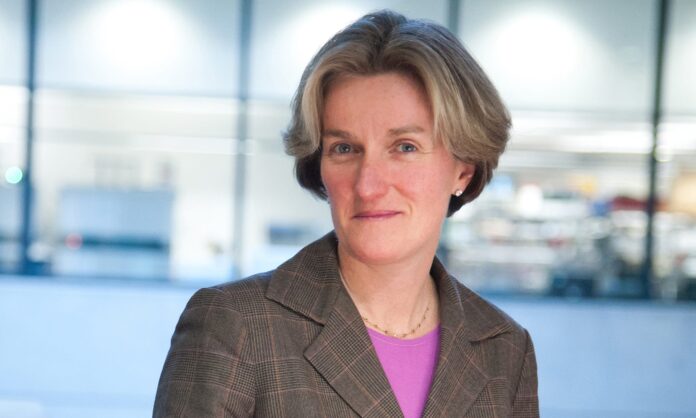
Professor Helen McShane FRCP PhD FMedSci is a leading British infectious disease physician and one of the world’s most influential figures in tuberculosis (TB) vaccine development. A Professor of Vaccinology at the University of Oxford and Director of the NIHR Oxford Biomedical Research Centre, she has dedicated more than two decades to advancing vaccines for some of the world’s most challenging infectious diseases.
Prof. McShane studied psychology (BSc, 1988) and medicine (MB BS, 1991) at the University of London. Early clinical work in Brighton during the height of the HIV epidemic proved formative: caring for severely ill patients shaped her conviction to combine clinical medicine with infectious disease research. Drawn to understudied pathogens, she chose Mycobacterium tuberculosis as her focus, a decision that would define her career.
After moving to Oxford as a specialist registrar, she won an MRC Clinical Training Fellowship and completed a PhD (2001) on novel T-cell–targeted TB immunization strategies. Supported by successive Wellcome Trust fellowships, she rapidly established her own research programme and, in 2001, founded and began leading Oxford’s TB vaccine group.
Prof. McShane’s team went on to develop MVA85A, the first new TB vaccine candidate in over 40 years to reach human efficacy testing, marking a milestone for global TB research. Her work has expanded the scientific and clinical infrastructure for TB vaccine evaluation globally, and helped build long-standing collaborative networks throughout Africa. She has also chaired the TBVI Advisory Committee, guiding international efforts to advance promising vaccine candidates.
Her research portfolio is broad and pioneering: controlled human mycobacterial challenge models, aerosol vaccine delivery directly to the lungs, and advanced immunomonitoring techniques that push the field toward more precise, rapid evaluation of vaccine efficacy. She has authored over 180 peer-reviewed publications and served as a mentor to many scientists who now lead TB research worldwide.
Beyond TB, Prof. McShane has played major national roles in pandemic response. During COVID-19, she coordinated Oxford’s and the UK’s drug-trial programmes and now leads efforts to develop a SARS-CoV-2 controlled human infection model, which will improve understanding of protective immunity and accelerate next-generation vaccine testing.
Prof. McShane’s contributions have been recognized through election as a Fellow of the Royal College of Physicians, an NIHR Senior Investigator, and a Fellow of the Academy of Medical Sciences. She continues to serve as Deputy Head of Oxford’s Medical Sciences Division and as an Honorary Consultant in infectious diseases.
Helen McShane’s legacy lies not only in the vaccine candidates she has helped deliver, but in the transformation she has brought to the global TB research landscape. She has built international clinical trial capacity, trained generations of infectious disease researchers, and advanced scientific understanding of how the human immune system responds to TB. Her leadership has reshaped the pathway from laboratory discovery to human trials, bringing the world closer to the long-sought goal of an effective TB vaccine. Her work has also strengthened the UK’s pandemic research readiness and continues to influence vaccine science far beyond TB
Inspired path
A medical doctor by training, Prof. McShane first became interested in infectious diseases while working as a resident in Brighton in the early 1990s, a city on the south coast of the UK with a large gay community at the onset of the HIV/AIDS epidemic. At that time, she cared for a ward full of young patients: men her own age, all dying from Pneumocystis carinii–jirovecii pneumonia (PCP) and disseminated mycobacterial infections.
“As a junior doctor, it was an incredibly formative time because it was a fascinating mix of palliative care and really interesting infectious diseases. So, that’s what got me hooked on infectious diseases,” Prof. McShane recalls.
She later encountered a growing number of tuberculosis (TB) cases in London, where the disease was undergoing a dramatic resurgence in the early days of the HIV/AIDS epidemic, before antiretroviral therapy became available.
Prof. McShane remembers how difficult it was to pursue TB research at the time. Funding was scarce, and the field was small. Nonetheless, she accepted the challenge and moved to Oxford, committing her PhD entirely to TB research. She eventually secured funding that allowed her not only to continue but to lead the TB program.
“And that’s what I’ve done ever since,” she reflects.
Advantages and limitations of BCG
Developed more than 100 years ago, Bacille Calmette–Guérin (BCG) remains the only licensed vaccine against TB. It is a live attenuated strain of Mycobacterium bovis, the bovine form of TB and the reason milk pasteurization became standard practice. WHO guidelines recommend administering BCG as close to birth as possible, as strong evidence shows it provides consistent and reliable protection against severe, disseminated TB in early childhood.
This includes TB that spreads beyond the lungs, particularly TB meningitis in infants. Its effectiveness in preventing these life-threatening forms of the disease is the primary reason BCG remains a cornerstone of childhood immunization programs worldwide.
Still, the story is not as straightforward as saying BCG “doesn’t work” against pulmonary TB. Two landmark studies, the British MRC trial in the UK and a study in North Alaskan Indigenous communities, showed that BCG can be highly effective against pulmonary disease in adolescents. But efficacy varies dramatically. In lower- and middle-income countries, where the burden of TB is highest, large trials such as the Chingleput study in India found little to no protection against lung disease.
Despite its limitations, Prof. McShane emphasizes that the complexity of BCG’s performance should not overshadow its well-documented ability to prevent severe, disseminated TB. For this reason, the WHO continues to recommend universal neonatal BCG vaccination worldwide.
BCG as an immune modulator
The so-called “non-specific” effects of BCG have long been controversial, largely because study results vary widely across regions. This inconsistency raises questions about whether these effects are genuine or influenced by confounding factors. Challenges include the absence of a fully established biological mechanism, variability among BCG strains and vaccination practices, and concerns about publication bias—issues heightened by the political and policy implications of such findings. These factors can affect mortality or infection risk independently of BCG, making it difficult to determine whether the vaccine itself is responsible.
“I think it is increasingly felt that there is something real here and that there really is a so-called non-specific effect of BCG,” Prof. McShane affirms.
One of the clearest examples of BCG’s non-specific immune activity is its long-standing global use in the treatment of non-muscle invasive bladder cancer. When administered intravesically, BCG provides robust protection against disease recurrence if cancer is detected early, demonstrating its capacity to modulate immune responses beyond TB.
This issue has become particularly important because two leading candidates in the new generation of BCG-replacement vaccines are being evaluated solely for their efficacy against TB. Investigating their potential non-specific effects is far more challenging, making it difficult to determine whether they match or exceed BCG’s broader immunological benefits.
“We need to look at the data from these new vaccines very closely to make sure that those vaccines are not non-inferior to BCG in terms of these non-specific effects—as well, of course, as looking at the efficacy of these new vaccines against their specific effects to protect against TB,” she emphasizes. “That’s very difficult,” she adds, noting that such data will likely need to be gathered through phase IV post-licensing surveillance.
Obstacles to a successful TB vaccine
Tuberculosis remains one of the most challenging pathogens to target with a vaccine. It is a remarkably sophisticated organism, capable of evading and subverting the human immune system to avoid detection. An estimated quarter of the world’s population is latently infected with TB. In these individuals, the bacterium lies dormant and reactivates primarily when immune function becomes compromised.
Two major obstacles impede vaccine development: the absence of reliable immune correlates of protection and the limitations of animal models. Immune correlates of protection are the markers researchers use to determine whether a vaccine is likely to be effective. For TB, such correlates simply do not exist. While scientists understand certain immune responses that contribute to protection, they do not know which specific components correlate with actual immunity.
In addition, it is unclear which, if any, animal model reliably predicts vaccine efficacy in humans. Researchers evaluate immune responses and animal data but, ultimately, must make informed judgments about which candidates appear most promising before advancing them into human trials.
“So, to a certain extent, TB vaccinology is empirical,” she acknowledges.
A third major challenge is the complexity and scale of efficacy trials. To date, M72/AS01e is the only new TB vaccine candidate that has demonstrated efficacy in humans, achieving 49.7% protection in a phase 2b trial. A phase 3 study is currently underway, but because TB incidence is relatively low even in high-burden settings—and because the disease is so complex—the trial requires 20,000 participants, will take five or more years to complete, and is projected to cost around half a billion USD.
Most promising TB candidates
According to Prof. McShane, the field of TB vaccines can broadly be divided into two categories. The first includes whole-organism vaccines, designed to replace BCG. The second comprises subunit vaccines, which deliver one or two specific TB proteins along with a delivery system or adjuvant, are designed to boost a neonatal BCG vaccination.
The most advanced subunit vaccine is M72/AS01e. It is a protein-adjuvant vaccine that combines two TB proteins, the 32- and 39-kilodalton antigens, delivered with an adjuvant called AS01. To date, M72 is the only TB vaccine to demonstrate efficacy in a phase 2b trial, and a phase 3 trial is currently underway.
“And the field, I think it’s fair to say, awaits that phase 3 result with anticipation and a little nervousness. This is, at the moment, the most promising vaccine,” Prof. McShane confirms.
Other candidates, including the protein-adjuvant vaccine H107 and TB vaccines using mRNA technology, are still in early-phase studies.
Among BCG replacement vaccines, two leading candidates are in phase 3 trials. The first, MTBVAC, is a first-in-class vaccine: a rationally attenuated strain of Mycobacterium tuberculosis developed specifically for human use. With promising preclinical animal data, it is currently being tested in infants.
The second, VPM1002, is a genetically modified strain of BCG that expresses listeriolysin, aiming to engage a different immune processing pathway and enhance the vaccine’s immunogenicity.
“So, I think that those three candidates are the [ones] being tested in phase 3 trials, and the world awaits that data with interest,” Prof. McShane shares enthusiastically.
Prof. McShane’s current work
Historically, the first vaccine developed by Prof. McShane and her team was MVA85A, which uses a modified Vaccinia virus (MVA) that is harmless to humans. This virus carries a gene from the TB bacterium, stimulating an immune response.
Despite this setback, the team was committed to extracting as much insight as possible from the trial. They analyzed immune correlate samples to gain unique insights into protective immunity, which are now guiding the development of next-generation TB vaccines.
“We’ve been identifying new protective antigens in a number of different ways, using reverse vaccinology and immunopeptidomic approaches, to start from scratch,” Prof. McShane explains.
TB has roughly 4,000 antigens, so selecting the most promising ones presents a significant challenge.
One other avenue they are exploring is delivering vaccines directly into the lungs
“There’s increasing data from animal models that delivering a new TB vaccine into the lungs may be the most protective way to develop a new TB vaccine. Because, of course, that mimics the natural route of infection,” she explains.
The team is currently seeking funding to advance the most promising candidates into Good Manufacturing Practice (GMP) production and clinical trials.
Inhaled TB vaccine candidates
Because TB immunity is strongly T-cell–mediated, delivering TB antigens directly into the lungs could, in theory, provoke granulomatous or type IV hypersensitivity reactions similar to those seen in natural TB infection. For this reason, inhaled TB vaccines undergo rigorous preclinical evaluation to assess potential lung immunopathology.
Prof. McShane and her team have closely monitored the safety of these vaccines in early studies. To date, inhaled vaccines appear to be very safe for a range of respiratory pathogens, including TB. The next step is to conduct trials in high-burden TB countries to confirm safety in these populations and to evaluate the immune responses they induce.
“If a vaccine isn’t safe, it’s not going to go anywhere,” she asserts.
Human challenge studies
Human challenge models involve deliberately exposing volunteers to a pathogen under highly controlled clinical conditions. These models have been used for decades to accelerate vaccine development, most notably for malaria, where they contributed to the development of both RTS,S and R21 vaccines.
“They are particularly useful when vaccine development is difficult or complex, and there’s no better example of that than TB,” Prof. McShane remarks.
Unlike malaria and other pathogens for which challenge models exist—such as dengue, typhoid, and gonorrhea—she does not consider it ethical to expose volunteers to virulent Mycobacterium tuberculosis.
To initiate work in this area, her team used BCG, a live attenuated strain of Mycobacterium bovis already licensed for human use. They administered BCG intradermally and collected punch biopsies from the injection site to quantify bacterial load. Their findings showed that prior BCG vaccination reduces BCG recovery from skin biopsies, providing evidence that the model measures a biologically meaningful effect.
“The limitation, of course, is that this model doesn’t mimic the natural route of TB infection,” she notes.
To address this, they developed an aerosol BCG challenge model, in which BCG is nebulized into the lungs. Using bronchoscopy, they collect lung wash samples and quantify bacterial load to assess the protective effect of prior BCG vaccination.
The team is expanding this model to other settings. In an NIH-funded study, they are testing the aerosol BCG challenge to evaluate the preliminary efficacy of a candidate vaccine, IDRI-93-GLSE.
Regarding regulatory barriers for new TB vaccines, she identifies the size, scale, complexity, and cost of efficacy trials as the main challenges.
Prof. McShane believes access to a TB vaccine is less about policies and more about money. She says that there’s very little commercial market for new TB drugs and TB vaccines. She thinks the world must support R&D for TB vaccines and drugs because the world in the 21st century is small, and TB anywhere is a problem everywhere.
“TB predates the pharaohs and yet in the 21st century still kills more people than any other infectious disease,” she concludes. “The world ignores TB at its peril.”