

Authors:
Enrique Chacon-Cruz, M.D., MSc
Felicitas Colombo, MPA
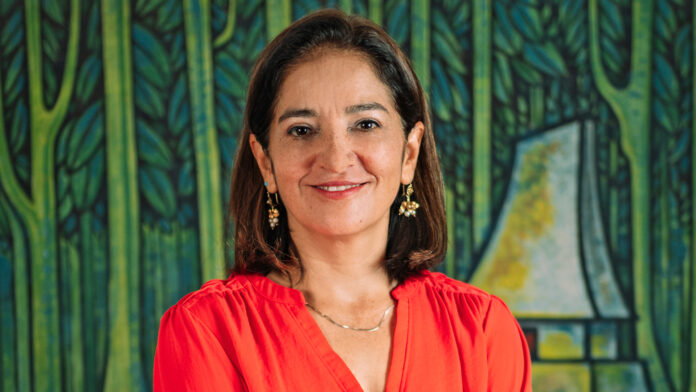
Dr. Gabriela Paz-Bailey is Chief of the Dengue Branch at the Division of Vector-Borne Diseases of the Centers for Disease Control and Prevention (CDC), San Juan, Puerto Rico. In this role, she oversees research, surveillance, and evaluation of interventions aimed at reducing the burden of arboviral diseases. Her work focuses on translating scientific evidence into public health action, with an emphasis on interventions that can be implemented at scale and sustained over time.
Dr. Paz-Bailey earned her MD from the University of San Carlos, Guatemala, and completed postgraduate training at the London School of Hygiene and Tropical Medicine, earning an MSc in Tropical Medicine and International Health and a PhD in Clinical Epidemiology. She joined the CDC in 2000 as an Epidemic Intelligence Service officer and has since devoted over two decades to understanding infectious diseases across the United States, Central America, Africa, and Asia.
Her research spans the natural history, acquisition, and treatment of infectious diseases including tuberculosis, Chagas disease, HIV, hepatitis B and C, herpes viruses, and arboviruses such as dengue and Zika. She has led long-standing dengue research cohorts and surveillance platforms that have directly informed policy decisions and program implementation. Notably, she served as CDC lead for the Advisory Committee on Immunization Practices (ACIP) Dengue Vaccines Workgroup, guiding the first dengue vaccine recommendation in the United States, which supported the first U.S. dengue vaccine recommendation.
Dr. Paz-Bailey’s work addresses several core public health challenges, including reducing the impact of mosquito-borne diseases through vaccination and vector control, strengthening surveillance systems for early threat detection, and generating evidence to inform prevention strategies for emerging pathogens.
Her work has been widely published in peer-reviewed journals. Rather than focusing solely on scientific outputs, Dr. Paz-Bailey has emphasized public health impact. Her approach combines research design with attention to feasibility, implementation, and long-term sustainability, elements she considers essential for strengthening health systems and protecting populations.
The path into medicine
Born and raised in Guatemala, where she also attended medical school, Dr. Paz-Bailey began her career working with Doctors Without Borders, providing primary care to Guatemalan refugees living in Mexico during the civil war. Working in resource-limted settings early in her career shaped her decision to pursue a career in public health.
She initially worked in sexually transmitted diseases and HIV. During the Zika outbreak, when there was an urgent need to understand the risk of sexual transmission, she was called upon as an expert. She moved to Puerto Rico, where she implemented a cohort study to examine the duration of virus shedding in semen and other body fluids.
Controlling dengue
Dengue is the most common mosquito-borne viral disease globally and, after malaria, one of the leading causes of morbidity and mortality worldwide. Dr. Paz-Bailey explains that vector control is extremely challenging. Once an outbreak is established, it is very difficult to control or stop. As a result, most efforts during outbreaks focus on clinical management, ensuring that clinicians can recognize dengue and provide appropriate treatment, primarily through fluid replacement.
Global efforts to control dengue have evolved over time. In the Americas, the Aedes aegypti elimination campaign using DDT achieved significant success in the 1960s and 1970s. However, insecticide resistance and a lack of sustained resources ultimately undermined those efforts. Today, insecticide resistance is widespread, limiting the effectiveness of many traditional mosquito-control tools.
“There are other new tools, like spatial emanators, that do not attempt to kill mosquitoes,” Dr. Paz-Bailey explains. “They [instead] change the biting behavior [by] disorienting mosquitoes and affecting their nervous system. And there are some promising results from dengue trials,” she adds, emphasizing that new tools are now available.
Novel technologies, including Wolbachia-based methods, have also demonstrated reductions in dengue incidence.
“Wolbachia-based methods, which can be used for mosquito suppression or for mosquito replacement, provide hope [for] non-insecticide [approaches] to control mosquitoes,” she says.
Dengue transmission occurs when a mosquito bites an infected person and subsequently feeds again, biting someone who is not infected and thereby transmitting the virus. Travelers who visit endemic areas can introduce the virus multiple times into regions where Aedes aegypti mosquitoes are present, creating a risk of local transmission.
Dr. Paz-Bailey also stresses the importance of integrated strategies that target mosquitoes at multiple stages of their life cycle. These include the use of larvicides, community cleanup campaigns, elimination of standing water, and personal protection measures such as repellents and bed nets.
Wolbachia-based interventions
Wolbachia is a naturally occurring bacterium that is not normally found in Aedes aegypti mosquitoes. Laboratory studies have shown that when Wolbachia is introduced into Aedes aegypti, it reduces viral loads not only for dengue, but also for other arboviruses such as Zika and chikungunya. Similar approaches are also being explored for malaria. Wolbachia naturally exists in approximately 60% of insect species and is considered safe for humans and animals.
Mosquito population replacement follows a different approach. In this strategy, enough male and female Wolbachia-infected mosquitoes are released over a period of roughly six months to replace the natural mosquito population. Studies have demonstrated significant reductions in dengue incidence using this method. One key advantage is that once Wolbachia becomes established in the mosquito population, ongoing releases are no longer necessary.
“However, there are challenges to scaling up this intervention,” she adds. “It is resource-intensive. You need to breed millions of mosquitoes, pack them and have an army of trained staff to release them. [It is also essential] to use the local mosquito strain and backcross [them] with Wolbachia-infected mosquitoes to ensure the mosquitoes are robust and well adapted to [local] climate and altitude.”
Wolbachia appears to be genetically stable and does not tend to mutate frequently. The mosquito genome also remains relatively stable, while dengue viruses continue to mutate.
This underscores the importance of long-term surveillance systems to monitor effectiveness and detect any potential development of resistance. In addition, the lack of established regulatory frameworks means that countries often must learn while implementing these interventions.
Predictive models
Predictive modeling and forecasting for dengue have proven very challenging. Short-term predictions, up to one month, can perform reasonably well but with important caveats. These models tend to perform poorly during epidemics and during periods of low transmission.
Forecasts that attempt to predict dengue trends beyond one month generally show poor performance. The models that tend to perform better are relatively simple ones, including those that rely on historical data, spatial models, or ensemble approaches that combine multiple models. Overall, however, the business of predicting when and where dengue epidemics will occur is not flourishing at present.
“However, we have used mathematical modeling to understand the impact of interventions and inform cost-effectiveness [analyses] for the dengue vaccine and other interventions and to also guide vector control programs,” Dr. Paz-Bailey recalls, emphasizing that these tools can effectively inform and support public health programs.
Dengue vaccines
Experts have emphasized that dengue vaccines present unique challenges because they must protect against four distinct dengue serotypes. Unlike vaccines that target a single virus, dengue vaccines must be effective against all four. From the natural history of dengue, we also know that a second infection carries the highest risk of severe disease.
Dengvaxia was the first dengue vaccine to be developed. It was initially recommended by the World Health Organization (WHO) and used in several countries, including the Philippines. Its history is now well known.
“We’re all familiar with what happened there,” says Dr. Paz-Bailey, referring to studies that identified an increased risk of severe dengue among the youngest trial participants. Researchers ultimately determined that individuals who had not previously been infected with dengue faced a higher risk of dengue if they were vaccinated.
As a result, WHO revised its recommendation to limit dengue vaccination to individuals with laboratory-confirmed prior dengue infection. In the U.S., Dengvaxia is the only dengue vaccine approved and recommended for use in children and adolescents 9 through 16 years old who have laboratory-confirmed previous dengue virus infection and are living in an area where dengue is endemic. Eventually, the manufacturer discontinued production citing lack of demand in the global market, and Dengvaxia will no longer be available.
Q-denga (also known as TAK-003) is a two-dose vaccine administered three months apart. WHO recommends its use in areas of high transmission, defined as regions where dengue seroprevalence among children is approximately 60 percent, an indicator of very intense transmission. Q-denga has demonstrated efficacy against all serotypes among individuals with prior dengue infection (seropositive) and provides strong protection against dengue serotypes one and two. However, clinical trials did not demonstrate protection against serotypes three and four among those dengue-naive or seronegative.
The vaccine has been implemented in Europe for travelers and in Brazil as part of routine immunization programs, and post-implementation effectiveness studies have already been published.
“A study in Lancet demonstrated vaccine protection [under real-world conditions during a dengue outbreak in Sao Paulo, Brazil], which is really promising,” Dr. Paz-Bailey notes.
The manufacturer of Q-denga is continuing studies to better understand the efficacy and safety against dengue serotypes three and four. Dr. Paz-Bailey is particularly interested in additional safety and efficacy data for these serotypes among seronegative individuals.
TV003, a one-dose vaccine originally developed by the U.S. National Institutes of Health (NIH) and recently approved in several countries, has completed phase three trials. These trials demonstrated efficacy among both among both seropositive and seronegative, with good protection against dengue serotypes one and two. However, there was no transmission of serotypes three and four during the trial period.
“[As a result,] there is no data yet on efficacy for these serotypes,” she notes, adding that further studies are underway. “Despite these limitations, having multiple vaccines available represents real progress.”
Currently, WHO recommends dengue vaccination in high-transmission areas, which do not include all dengue-endemic regions. At present, Q-denga is the only dengue vaccine recommended by WHO for widespread use.
Public health challenges
The world is navigating uncertain times in public health, particularly for vaccines, as science and public institutions operate within an increasingly complex political landscape. Nevertheless, the evidence supporting vaccine safety and effectiveness is strong and undeniable. Vaccination has been instrumental in extending global life expectancy and contributing to a healthier world.
“It is essential that public health recommendations continue to be guided by scientific evidence,” says Dr. Paz-Bailey.
CDC works closely with the Food and Drug Administration (FDA), the National Institutes of Health (NIH), and international partners including the Pan American Health Organization (PAHO), to generate disease intelligence, strenghthen laboratory capacity and align guidance.
After decades of limited options for dengue prevention, and declining effectiveness of traditional vector control programs due to insecticide resistance, the field now stands on the brink of a new era. Dr. Paz-Bailey emphasizes the need for coordinated action across private sectors and governments to fully leverage the tools now available to combat dengue.
“We finally have innovative tools that offer real hope to significantly reduce morbidity and mortality due to dengue,” she concludes.