
Introduction
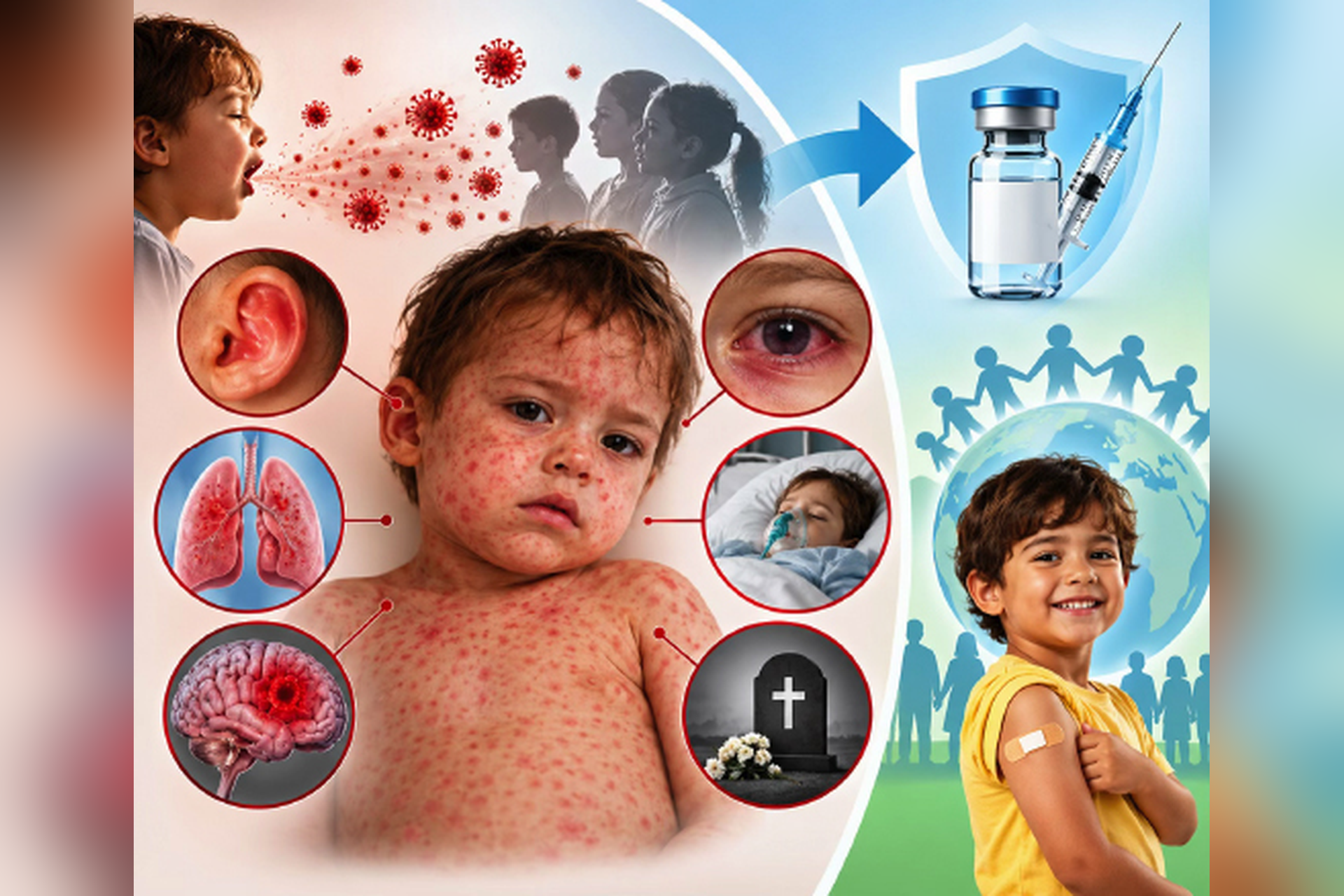
Measles remains one of the most contagious human infectious diseases and one of the clearest indicators of weaknesses in national immunization programs. Despite the availability of a safe, highly effective, and affordable vaccine for more than six decades, measles continues to cause substantial morbidity, hospitalizations, and preventable deaths worldwide.
The resurgence of measles in 2025–2026 represents a serious setback to global elimination efforts. According to the World Health Organization (WHO), an estimated 95,000 people died from measles in 2024, predominantly unvaccinated or undervaccinated children younger than five years. Between 2000 and 2024, measles vaccination prevented approximately 59 million deaths worldwide. (1)
However, the central challenge extends beyond achieving high national vaccination coverage. Measles elimination requires sustained coverage of at least 95% with both doses of measles-containing vaccine (MCV1 and MCV2), with homogeneous protection across districts, communities, and population subgroups. Even countries reporting high national coverage may experience major outbreaks when unvaccinated individuals are geographically or socially clustered. (2,3)
This Best Practice review examines the global measles situation in 2026, the importance of eliminating immunity gaps, and the practical clinical and public health interventions required to interrupt transmission and advance equitable immunization.
1. Global epidemiological situation in 2026
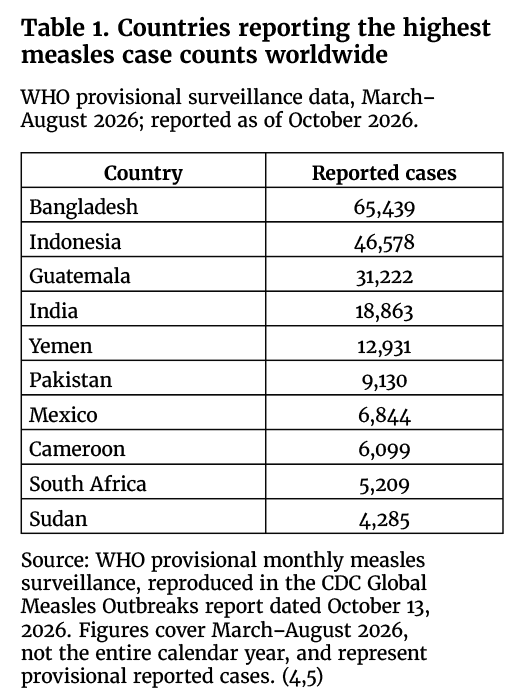
WHO provisional surveillance data indicates substantial measles activity across multiple regions, including South and Southeast Asia, Africa, and the Americas.
These data demonstrate that measles resurgence is not restricted to low-income countries. Transmission also affects middle-income and high-income settings, particularly where immunization gaps have accumulated.
WHO emphasizes that provisional surveillance data underestimate the true number of infections because of underdiagnosis, incomplete reporting, and reporting delays, frequently extending one to two months. (5)
2. The 95% vaccination threshold: necessary but not sufficient
Measles has an exceptionally high basic reproduction number (R0), commonly estimated at approximately 12–18 in fully susceptible populations. Consequently, extremely high population immunity is required to interrupt sustained transmission.
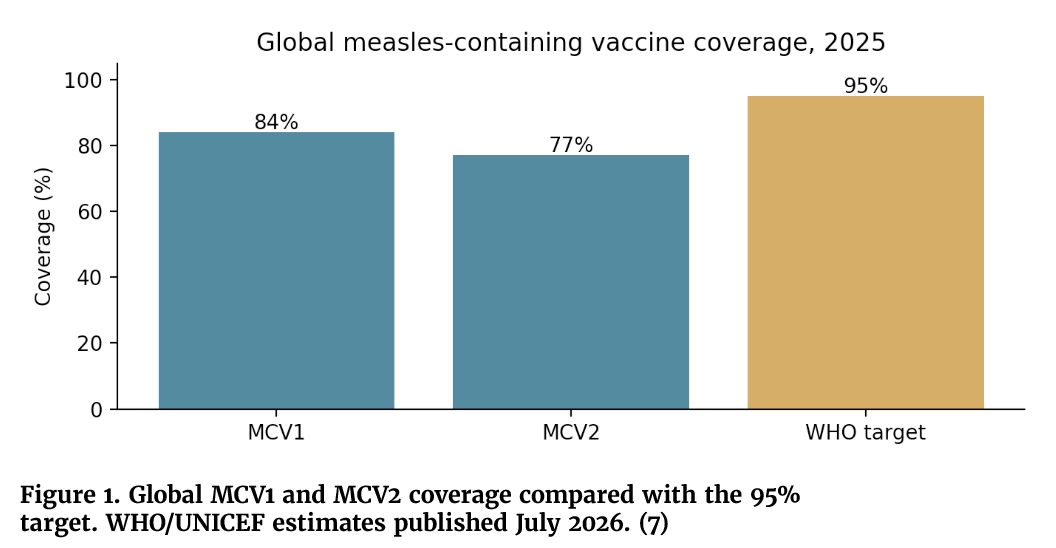
WHO recommends maintaining at least 95% coverage with both MCV1 and MCV2, ideally throughout every district and community, rather than exclusively at the national level. (2,6) Yet global vaccination coverage remains considerably below this target.
In 2025, approximately 84% of children worldwide received the first dose of measles-containing vaccine, while only 77% received the second. These figures highlight the persistent vulnerability of millions of children and the importance of completing the recommended vaccination schedule.
Why national averages can be misleading
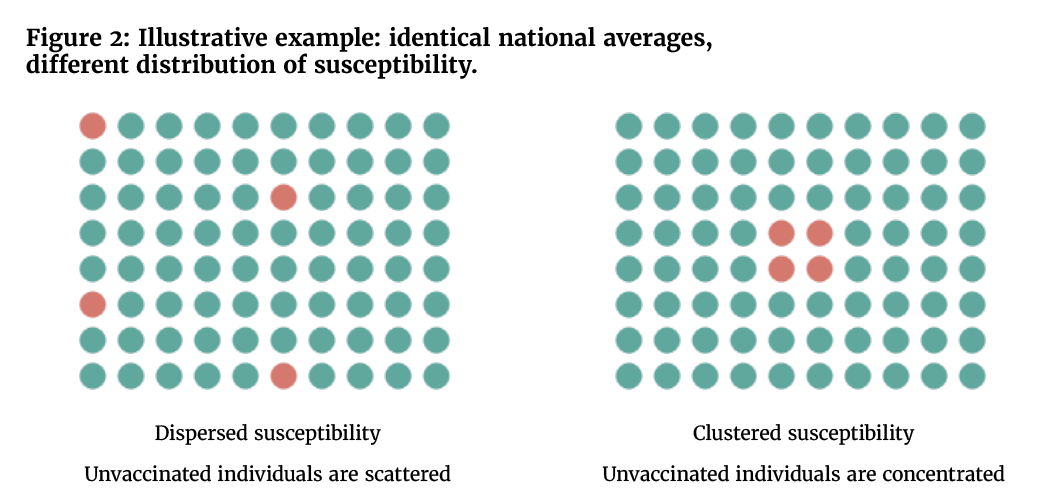
A country may report 95–97% national vaccination coverage while still having communities where coverage is substantially lower. For example, a hypothetical country with 96% national coverage could have certain districts with only 65–70% coverage. Such districts may sustain substantial outbreaks following the introduction of measles virus, even when the national average appears satisfactory.
Research examining measles transmission in France demonstrated that subnational differences in vaccination coverage and population immunity can influence outbreak persistence, even when national coverage appears relatively high. (8) The implication is fundamental: immunization programs must measure not only how many people are vaccinated, but also where susceptible individuals are concentrated.
3. Best practices for measles prevention and outbreak control
A. Achieve and sustain high two-dose coverage
Routine immunization programs should prioritize timely administration of MCV1 and MCV2 according to national schedules, with systematic identification of children who have missed either dose. Vaccination status should be assessed during every appropriate healthcare encounter, including primary care visits, hospital encounters, school health assessments, and community outreach activities. Catch-up vaccination should be routinely offered to eligible children, adolescents, and adults without adequate evidence of immunity. (2,3)
B. Identify and eliminate clusters of unvaccinated individuals
One of the most important priorities is identifying populations where susceptibility accumulates. National immunization programs should routinely analyze vaccination coverage at district, municipal, school, and community levels, where reliable data are available. Particular attention should be given to zero-dose children, migrant and displaced populations, geographically isolated communities, and populations experiencing persistent barriers to healthcare. Targeted vaccination campaigns should complement, rather than replace, strong routine immunization services. (3,9).
C. Strengthen clinical, molecular, and epidemiological surveillance
Measles surveillance must be sufficiently sensitive to identify suspected cases promptly, including those occurring in previously measles-free areas. Best practices include rapid case notification, appropriate serological testing, molecular confirmation using RT-PCR, and genomic characterization where indicated. Molecular surveillance is particularly valuable for understanding transmission chains, investigating imported cases, and supporting documentation of measles elimination. Close integration between clinicians, laboratories, epidemiologists, and immunization programs is essential. (5,10)
D. Implement rapid outbreak response and post-exposure prophylaxis
Every suspected measles case should trigger immediate public health action, without waiting unnecessarily for laboratory confirmation. Key interventions include airborne isolation, rapid contact identification, assessment of immunity, and appropriate post-exposure prophylaxis. For susceptible individuals without contraindications, measles-containing vaccine administered within 72 hours of exposure may provide protection. Immunoglobulin administered within six days may be indicated for selected high-risk contacts, including susceptible infants, pregnant individuals, and severely immunocompromised patients, according to national guidelines. (6,11) Outbreak response vaccination should be adapted to the local epidemiology, age distribution, and accumulated immunity gaps.
E. Prevent healthcare-associated transmission
Healthcare facilities can amplify measles transmission when cases are not recognized and isolated promptly. All healthcare personnel should have appropriate evidence of measles immunity, and facilities should maintain clear protocols for airborne precautions, patient triage, exposure management, and occupational health follow-up. Suspected cases should be separated immediately from other patients, particularly infants, pregnant individuals, and immunocompromised patients. (6,11)
F. Improve communication and address vaccine hesitancy
Measles vaccination programs must combine evidence-based communication with practical improvements in access. Healthcare professionals remain essential sources of trusted information. However, vaccine hesitancy should not be considered the sole explanation for underimmunization. Transportation difficulties, poverty, migration, limited healthcare access, service disruptions, and missed vaccination opportunities can be equally important contributors. Successful interventions require culturally appropriate communication, convenient vaccination services, and sustained engagement with local communities. (3,9)
4. Health equity: no community should be left behind
Measles outbreaks frequently reveal broader structural inequalities within healthcare systems. Children living in poverty, displaced populations, migrants, residents of conflict-affected areas, and communities with limited access to routine healthcare may experience disproportionately high risks of remaining unvaccinated.
WHO recognizes measles outbreaks as an important indicator of weaknesses in primary healthcare and inequities in immunization services. (3) An equitable measles elimination strategy must therefore incorporate identifying underserved communities, removing financial and administrative barriers, expanding mobile vaccination and outreach services, ensuring vaccine availability, and monitoring disparities in vaccination coverage.
Importantly, public health authorities should distinguish between individuals who decline vaccination and those who remain unvaccinated because healthcare systems have failed to reach them. A child who has never been offered a vaccine represents a different public health challenge from a child whose family has declined vaccination. Both require attention, but the interventions must be different.
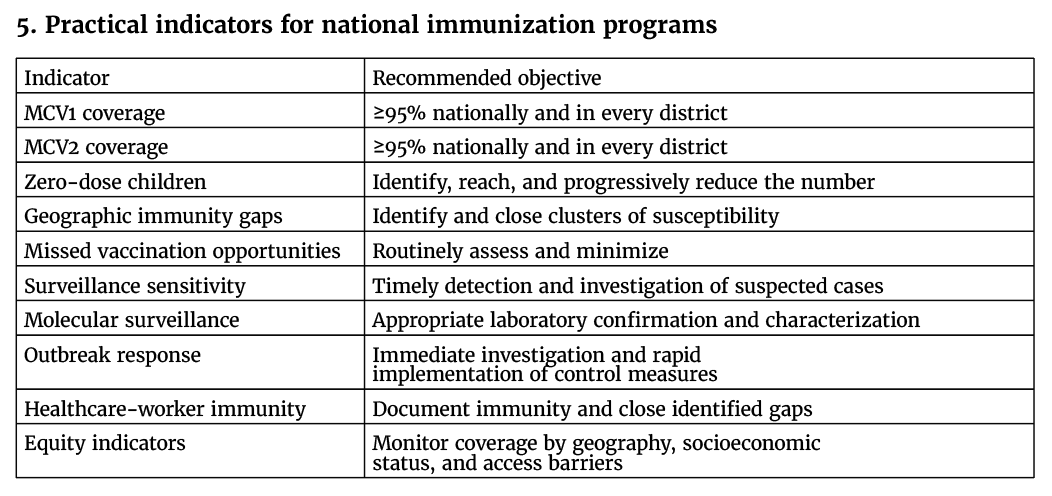
Conclusions:
The global resurgence of measles in 2026 demonstrates that the existence of an effective vaccine, and even apparently satisfactory national vaccination coverage, does not guarantee sustained protection against outbreaks.
For measles, 95% coverage is not merely a statistical target; it must translate into consistently high population immunity across communities, districts, and countries. The accumulation of susceptible individuals in geographically or socially clustered populations can undermine decades of progress toward elimination.
Strong routine immunization programs, timely catch-up vaccination, sensitive epidemiological and molecular surveillance, rapid outbreak response, and equitable access to vaccination must remain central priorities. Ultimately, measles elimination requires moving beyond national averages toward a more precise understanding of population immunity and the social and geographic distribution of susceptibility.
Measles elimination will not be achieved simply when countries reach 95% vaccination coverage nationally. It will be achieved when sustained high coverage is accompanied by the identification and protection of communities that have been systematically left behind (12).
Bolivia, Mexico, and the United States have now lost their measles elimination status, underscoring the urgent need to close immunization gaps, strengthen epidemiological surveillance, and enhance outbreak preparedness and response to prevent further transmission (12).
References:
- World Health Organization. Measles [Internet]. Geneva: WHO; 2026 [cited 2026 Oct 13]. Available from: https://www.who.int/news-room/fact-sheets/detail/measles
- World Health Organization. Measles – Bangladesh. Disease Outbreak News [Internet]. Geneva: WHO; 2026. Available from: https://www.who.int/emergencies/disease-outbreak-news/item/2026-DON598
- World Health Organization. Measles and rubella strategic framework: 2021–2030. Geneva: WHO; 2020. Available from: https://www.who.int/publications/i/item/measles-and-rubella-strategic-framework-2021-2030
- Centers for Disease Control and Prevention. Global measles outbreaks [Internet]. Atlanta: CDC; 2026 Oct 13. Data source: World Health Organization. Available from: https://www.cdc.gov/global-measles-vaccination/data-research/global-measles-outbreaks/index.html
- World Health Organization. Provisional monthly measles and rubella data [Internet]. Geneva: WHO; [cited 2026 Oct 13]. Available from: https://www.who.int/teams/immunization-vaccines-and-biologicals/Immunization-data-and-decision-making/surveillance/monitoring/provisional-monthly-measles-and-rubella-data
- World Health Organization. Measles – United States of America. Disease Outbreak News [Internet]. Geneva: WHO; 2025. Available from: https://www.who.int/emergencies/disease-outbreak-news/item/2025-DON561
- World Health Organization, United Nations Children’s Fund. Global childhood immunization coverage inches forward despite conflict and hesitancy – UNICEF, WHO [Internet]. Geneva: WHO; 2026 Jul 15. Available from: https://www.who.int/news/item/15-07-2026-global-childhood-immunization-coverage-inches-forward-despite-conflict-and-hesitancy—unicef–who
- Robert A, Kucharski AJ, Funk S. The impact of local vaccine coverage and recent incidence on measles transmission in France between 2009 and 2018. BMC Med. 2022;20(1):77. doi: 10.1186/s12916-022-02277-5. https://doi.org/10.1186/s12916-022-02277-5
- World Health Organization. Targeted and selective strategies in measles and rubella vaccination campaigns: interim guidance. Geneva: WHO; 2025. Available from: https://www.who.int/publications/i/item/9789240103399
- World Health Organization. Manual for the laboratory-based surveillance of measles, rubella, and congenital rubella syndrome [Internet]. Geneva: WHO. Available from: https://www.who.int/teams/immunization-vaccines-and-biologicals/immunization-analysis-and-insights/surveillance/surveillance-for-vpds/laboratory-networks/measles-and-rubella-laboratory-network/manual-for-the-laboratory-based-surveillance-of-measles-rubella-and-congenital-rubella-syndrome
- World Health Organization Regional Office for Europe. Eliminating measles and rubella in the WHO European Region: integrated guidance for surveillance, outbreak response and verification of elimination. Copenhagen: WHO Regional Office for Europe; 2024. Available from: https://www.who.int/europe/publications/i/item/9789289060783.
- PAHO urges countries to step up efforts to stop measles outbreaks and move towards elimination in the Americas. The Pan American Health Organization (PAHO) has confirmed: Available from: https://www.paho.org/en/news/17-11-2026-paho-urges-countries-step-efforts-stop-measles-outbreaks-and-move-towards.