

Introduction
Vaccine-preventable diseases continue to represent a substantial public health burden worldwide, despite the availability of safe and effective immunizations. Climate is a fundamental determinant of the transmission dynamics, geographic distribution, and seasonality of many infectious diseases, including numerous pathogens for which vaccines exist. Ongoing climate change—through rising temperatures, altered precipitation patterns, extreme weather events, and ecological disruption—is increasingly reshaping these dynamics, facilitating the emergence, re-emergence, and geographic expansion of vaccine-preventable infections.
Understanding how climate change influences the epidemiology of vaccine-preventable diseases is therefore a critical priority for public health research and policy. In this article, we synthesize current evidence on the interactions between climate change and infectious disease risk, with a particular focus on the role of vaccines and vaccination programs as essential tools to mitigate this growing global threat and strengthen population resilience in an era of environmental change.
Environment and Infectious Disease Transmission
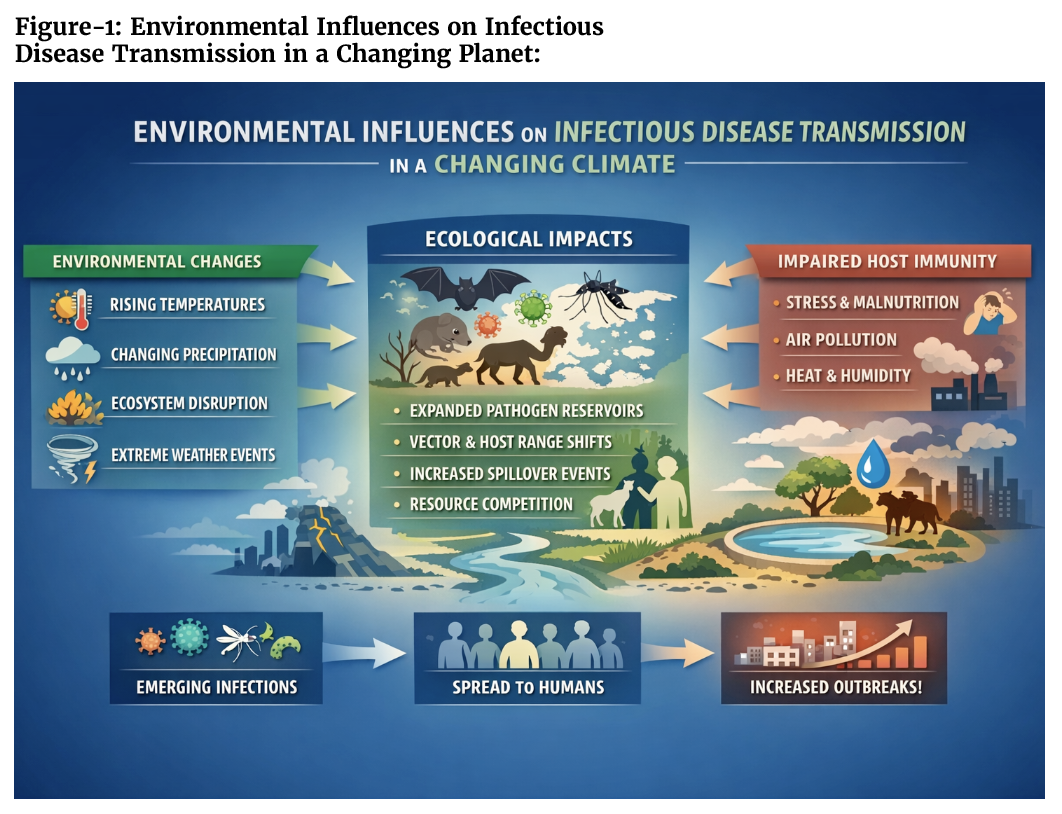
Climate change is increasingly reshaping the ecological conditions that govern infectious disease transmission. Environmental alterations driven by rising temperatures, changing precipitation patterns, and ecosystem disruption can expand pathogen reservoirs and host populations, shift their geographic ranges, and increase the frequency of spillover events into human populations (Figure 1). At the same time, climate-related stressors may impair host health and immunity, further facilitating successful transmission and outbreaks.
By modifying temperature, humidity, and rainfall, climate change can enhance pathogen survival and replication, extend transmission seasons, and increase the abundance or reproductive capacity of vectors and reservoirs. These effects can amplify disease burden within animal populations and increase opportunities for human exposure. Short-term climate variability, such as extreme rainfall or temperature fluctuations, may trigger sudden population surges in reservoir species by increasing food availability or reducing predator pressure, thereby heightening spillover risk. A classic example is the 1990s hantavirus outbreak in the southwestern United States, linked to a climate-driven expansion of deer mouse populations following ecological disruption.
Longer-term climate change can also alter the geographic distribution of reservoir hosts, vectors, and pathogens, leading to novel ecological interactions and new transmission pathways. Ecosystem degradation may force wildlife, domestic animals, and humans into closer contact as they compete for increasingly scarce resources, such as water. For instance, reduced surface water availability can concentrate wildlife and human populations at shared water sources, increasing opportunities for pathogen transmission. Similarly, climate-driven shifts in wildlife migration have been implicated in the southward expansion of flying fox populations in Australia, contributing to spillover of Hendra virus into horses and humans.
At a global scale, infectious disease diversity increases toward the equator, a pattern thought to reflect environmental conditions—such as higher temperatures and precipitation—that favor pathogen persistence and transmission. Modeling studies suggest that ongoing warming and increased rainfall may accelerate the transmission of pathogens associated with bats and birds to wildlife, livestock, and humans. The emergence of SARS-CoV-2, likely originating from bat reservoirs, underscores how altered ecological interfaces can facilitate the emergence of novel zoonotic pathogens.
Vector-borne diseases are particularly sensitive to climate change. Mosquitoes, ticks, and other arthropod vectors respond rapidly to changes in temperature, rainfall, and extreme weather, influencing vector survival, population density, and pathogen development. As a result, climate change is altering the distribution and transmission intensity of diseases such as dengue, malaria, chikungunya, zika, West Nile virus, and Lyme disease, which together account for a substantial proportion of emerging infectious disease events worldwide.
Climate change also affects water- and air-borne disease transmission. Increased rainfall and flooding can contaminate drinking water supplies, elevating the risk of outbreaks caused by enteric pathogens such as Salmonella, Cryptosporidium, and Vibrio cholerae. In climate-vulnerable regions, these effects may occur alongside expanding vector-borne disease transmission, compounding public health risks. In parallel, climate change can worsen air pollution, with combined effects that impair host immune function and increase susceptibility to respiratory infections. Chronic exposure to air pollutants and extreme temperature or humidity can disrupt immune responses, exacerbate underlying respiratory disease, and prolong pathogen survival in aerosols, particularly among vulnerable populations.
Together, these interconnected environmental, ecological, and immunological effects illustrate how climate change is reshaping infectious disease risk. By altering transmission routes, expanding pathogen reservoirs, and increasing host vulnerability, climate change is accelerating the emergence and spread of infectious diseases, underscoring the urgent need for integrated surveillance, prevention, and mitigation strategies.
All of these can be summarized in Figure-1:
Novel Technologies for Monitoring and Screening Emerging Infectious Diseases
Addressing the growing threat of climate-sensitive emerging infectious diseases (EIDs) requires surveillance systems that are faster, more sensitive, and more integrated than traditional approaches. Experience from recent epidemics and pandemics has shown that effective prevention and containment depend on multidisciplinary, multinational collaboration and the integration of diverse data streams across multiple platforms.
Genomic surveillance has emerged as a cornerstone of modern outbreak detection and response. Large-scale sequencing networks, exemplified during the COVID-19 pandemic, have enabled rapid pathogen identification, real-time tracking of transmission pathways, detection of variants of concern, and early recognition of drug resistance. When combined with epidemiologic data, genomic surveillance can clarify outbreak origins, reveal hidden transmission chains, and inform vaccine and therapeutic strategies. Despite its transformative potential, global genomic surveillance remains limited by uneven access to sequencing capacity, bioinformatics infrastructure, and representative sampling—particularly in low-resource settings.
Epidemiologic analyses, including active case finding and contact tracing, remain essential for defining transmission dynamics, estimating key parameters such as reproductive numbers, and identifying high-risk populations. The integration of epidemiologic data with climate, mobility, and demographic information can substantially improve outbreak prediction and response, as demonstrated by traveler-based surveillance networks that have detected previously unrecognized international outbreaks. In this context, sewage surveillance should be mandatory, as it enables the detection of pathogens even before widespread human transmission occurs, allowing earlier and more effective preventive measures to be implemented.
Predictive modeling and simulation, increasingly supported by artificial intelligence and machine learning, offer powerful tools to integrate genomic, epidemiologic, and environmental data. These models can forecast outbreak trajectories, evaluate intervention strategies, and guide policy decisions on vaccination, resource allocation, and non-pharmaceutical interventions. Their credibility and utility, however, depend on data quality, transparency, and sustained investment.
Geoinformatics, satellite imagery, and remote sensing technologies provide additional layers of early-warning capacity by monitoring environmental conditions associated with spillover risk, such as changes in vegetation, water availability, and climate extremes. These tools enable the identification of geographic hotspots for disease emergence and support targeted surveillance, vaccination planning, and rapid response, particularly in remote or resource-limited regions.
Mobile applications and digital health tools are increasingly used to support real-time surveillance, symptom reporting, contact tracing, and treatment adherence. While these technologies have demonstrated value—especially during the COVID-19 pandemic—their broader adoption depends on careful attention to data governance, privacy protections, and public trust.
Finally, biosensors and point-of-care diagnostics represent critical advances for early detection and containment. Wearable, ingestible, and portable diagnostic technologies—combined with rapid molecular assays—can enable timely diagnosis at the community level, facilitate immediate clinical and public health action, and improve outbreak control. Integration of these tools with digital reporting systems could further strengthen surveillance and response efforts.
Together, these emerging technologies highlight a paradigm shift toward integrated, data-driven surveillance systems. Expanding equitable access to these innovations and embedding them within coordinated global health networks will be essential to mitigate the accelerating risk of climate-driven infectious disease emergence.
From Surveillance to Prevention: The Role of Vaccines and Vaccination in Mitigating Emerging Infectious Diseases:
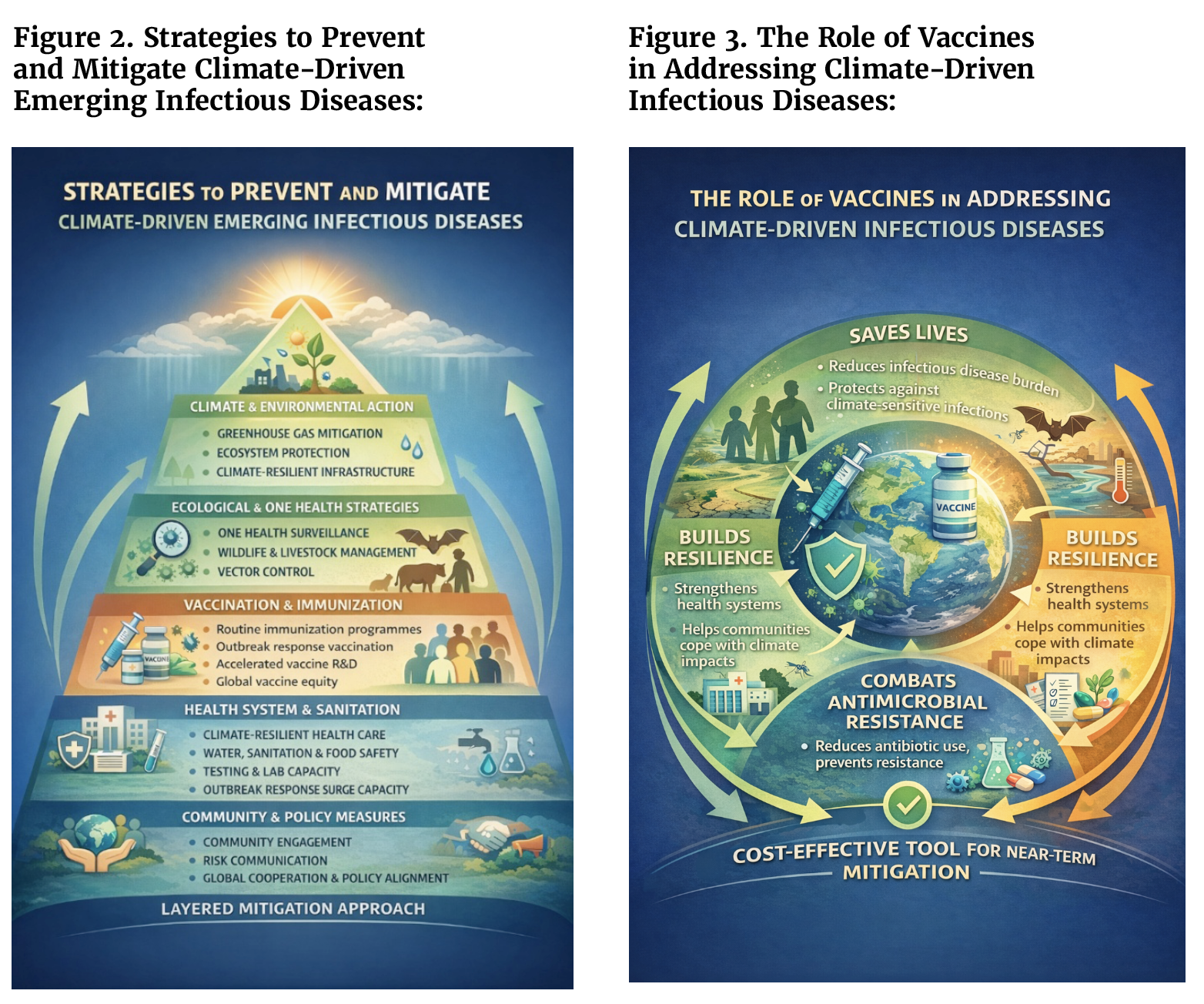
The coming decades will be increasingly shaped by the disruptive and potentially devastating consequences of a warming climate, including the amplification and geographic expansion of climate-sensitive infectious diseases, posing a major global threat to human health. Figure 2 summarizes the key impacts of climate change on infectious disease emergence and transmission, as well as potential mitigation strategies. Proactive and coordinated action indicating prevention and mitigation is therefore essential to reduce future health consequences.
Vaccines represent some of the most cost-effective public health interventions available and have already led to dramatic reductions in the burden of multiple infectious diseases, with several eliminated entirely in many regions. For a number of the infectious diseases, safe and highly effective vaccines are already available. Strategic use of these vaccines has the potential to substantially reduce community vulnerability and protect populations against both endemic and emerging infections whose transmission is increasingly influenced by climate change.
By reducing disease incidence and severity, vaccination can strengthen health system resilience and enhance the capacity of communities to cope with the broader health impacts of climate change, including extreme weather events and resource constraints. Importantly, widespread immunization offers a feasible and scalable near-term mitigation strategy, particularly when compared with the longer timelines required to achieve structural improvements in public health infrastructure or to address the root drivers of the climate crisis itself—especially in low- and middle-income countries.
In addition, vaccination can contribute to addressing the persistent and growing threat of antimicrobial resistance (AMR). By preventing infections that would otherwise require antibiotic treatment, vaccines reduce antibiotic use and selective pressure for resistance, reinforcing their role as an essential component of integrated strategies to combat AMR while simultaneously mitigating climate-related infectious disease risks.
Conclusion
Climate change is an accelerating global health threat that is already reshaping the epidemiology of infectious diseases. Although evidence continues to evolve, it is clear that climate-driven changes in ecosystems, human behavior, and health systems are increasing vulnerability to emerging and re-emerging infections. These effects interact with non-climatic determinants—such as globalization, socioeconomic conditions, and public health capacity—underscoring the need for integrated and coordinated responses.
Urgent action is required. Strengthening prevention and mitigation strategies must be prioritized alongside continued research and surveillance. Vaccination, in particular, represents a highly effective, scalable, and immediately deployable tool to reduce climate-sensitive infectious disease risk, especially in vulnerable populations and low- and middle-income countries. Expanding access to existing vaccines, accelerating development of new vaccines, and embedding immunization strategies within climate adaptation frameworks should become global public health priorities. Without decisive investment and coordination now, the health consequences of climate change will continue to intensify.
Bibliography
- Kim CL, Agampodi S, Marks F, Kim JH, Excler JL. Mitigating the effects of climate change on human health with vaccines and vaccinations. Front Public Health. 2023 Oct 12;11:1252910. doi: 10.3389/fpubh.2023.1252910.
- Zhang K, Dang Y, Li Y, Tao C, Hur J, He Y. Impact of climate change on vaccine responses and inequity. Nat Clim Chang. 2024 Dec;14(12):1216-1218. doi: 10.1038/s41558-024-02192-y.
- Bezirtzoglou C, Dekas K, Charvalos E. Climate changes, environment and infection: facts, scenarios and growing awareness from the public health community within Europe. Anaerobe. 2011 Dec;17(6):337-40. doi: 10.1016/j.anaerobe.2011.05.016.
- Hartinger SM, Palmeiro-Silva YK, Llerena-Cayo C, Blanco-Villafuerte L, Escobar LE, Diaz A, Sarmiento JH, Lescano AG, Melo O, Rojas-Rueda D, Takahashi B, Callaghan M, Chesini F, Dasgupta S, Posse CG, Gouveia N, Martins de Carvalho A, Miranda-Chacón Z, Mohajeri N, Pantoja C, Robinson EJZ, Salas MF, Santiago R, Sauma E, Santos-Vega M, Scamman D, Sergeeva M, Souza de Camargo T, Sorensen C, Umaña JD, Yglesias-González M, Walawender M, Buss D, Romanello M. The 2023 Latin America report of the Lancet Countdown on health and climate change: the imperative for health-centred climate-resilient development. Lancet Reg Health Am. 2024 Apr 23;33:100746. doi: 10.1016/j.lana.2024.100746.
- Mahmud AS, Martinez PP, He J, Baker RE. The Impact of Climate Change on Vaccine-Preventable Diseases: Insights From Current Research and New Directions. Curr Environ Health Rep. 2020 Dec;7(4):384-391. doi: 10.1007/s40572-020-00293-2.
- Liao H, Lyon CJ, Ying B, Hu T. Climate change, its impact on emerging infectious diseases and new technologies to combat the challenge. Emerg Microbes Infect. 2024 Dec;13(1):2356143. doi: 10.1080/22221751.2024.2356143.
- Wang Z, Pei S, Cui H, Zhang J, Jia Z. Zoonotic spillover and extreme weather events drive the global outbreaks of airborne viral emerging infectious diseases. J Med Virol. 2024 Jun;96(6):e29737. doi: 10.1002/jmv.29737.
- Machalaba CM, Karesh WB. Emerging infectious disease risk: shared drivers with environmental change. Rev Sci Tech. 2017 Aug;36(2):435-444. doi: 10.20506/rst.36.2.2664.
- Le Turnier P, Leport C, Martin P, Jadand C, Hoen B, Guégan JF. Multi-sectorial research is paramount for preventing and controlling emerging infectious diseases. Rev Epidemiol Sante Publique. 2020 Apr;68(2):133-136. doi: 10.1016/j.respe.2019.09.009.
- Hunter PR. Future disease burden due to the rise of emerging infectious disease secondary to climate change may be being under-estimated. Virulence. 2025 Dec;16(1):2501243. doi: 10.1080/21505594.2025.2501243.
- Badra R, Zhang W, Tam JSL, Webby R, Van Der Werf S, Nikisins S, Cullinane A, Gharaibeh S, Njouom R, Peiris M, Kayali G, Heraud JM. A Systematic Review of New, Enhanced Surveillance Systems and Methodologies for Zoonotic Influenza Viruses in Animals and Human-Animal Interface. Influenza Other Respir Viruses. 2025 Nov;19(11):e70178. doi: 10.1111/irv.70178.
- One Health Initiative. https://onehealthinitiative.com/.
- WHO: Climate Change. https://www.who.int/news-room/fact-sheets/detail/climate-change-and-health.
- WHO Foundation: Climate and Health. https://www.who.foundation/climate-and-health.
- Climate Foundation: Solutions for the Planet. https://www.climatefoundation.org/.
- Johns Hopkins Bloomberg of School of Public Health: A Warming World Means Vaccination is More Important Than Ever. https://publichealth.jhu.edu/ivac/a-warming-world-means-vaccination-is-more-important-than-ever.