
Introduction
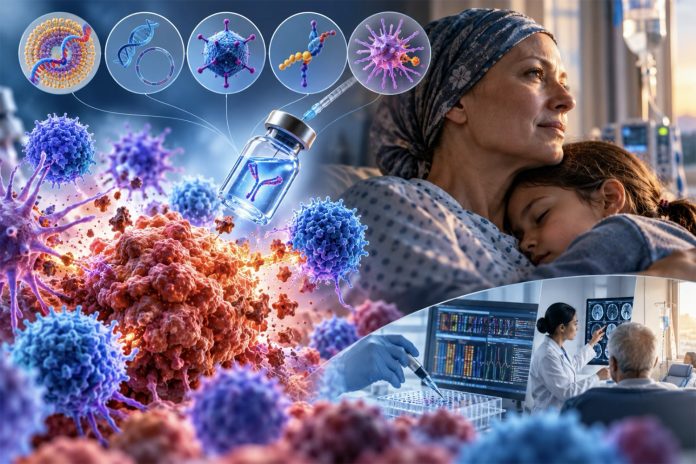
Vaccines have traditionally been associated with preventing infectious diseases. Today, advances in immunology, molecular biology, and biotechnology are expanding their potential into cancer treatment. Therapeutic cancer vaccines represent a new frontier in precision medicine, offering the possibility of training the immune system to recognize and eliminate malignant cells.
From preventing infections to treating cancer
The relationship between vaccination and cancer is not entirely new. Vaccines against human papillomavirus (HPV) and hepatitis B virus (HBV) have already demonstrated that preventing infections can also prevent certain malignancies. However, therapeutic cancer vaccines pursue a fundamentally different objective: stimulating immune responses against tumors that have already developed.
Unlike conventional preventive vaccines, therapeutic cancer vaccines must overcome a particularly challenging biological environment. Cancer cells originate from the body’s own tissues, making them difficult for the immune system to distinguish from healthy cells. Moreover, tumors develop sophisticated mechanisms to escape immune surveillance, including suppression of T-cell activity and alterations in antigen presentation.
Recent advances in tumor immunology have renewed interest in therapeutic vaccination. Researchers can now identify tumor-associated antigens and tumor-specific neoantigens, creating opportunities to generate targeted immune responses against malignant cells. The objective is not simply to produce antibodies but, importantly, to activate cytotoxic CD8+ T lymphocytes capable of recognizing and destroying cancer cells [1,2].
The emergence of personalized cancer vaccines
One of the most promising developments is the emergence of personalized neoantigen vaccines. These vaccines are designed using the genetic characteristics of an individual patient’s tumor.
Through tumor sequencing and bioinformatics, researchers identify mutations that produce abnormal proteins, known as neoantigens. Because these neoantigens are generally absent from normal tissues, they can provide highly specific targets for immune recognition.
Once selected, neoantigens can be incorporated into different vaccine platforms, including messenger RNA (mRNA), synthetic peptides, DNA, viral vectors, and dendritic cell-based vaccines.
Among these technologies, mRNA has attracted particular attention because of its flexibility, ability to encode multiple antigens, and potential for relatively rapid manufacturing. Importantly, personalized vaccines may address the biological heterogeneity of cancer, recognizing that two patients with the same type of malignancy may harbor substantially different tumor mutations.
Nevertheless, personalization introduces challenges involving manufacturing time, cost, antigen selection, and the ability to deliver treatment before disease progression.
The scientific significance of this approach extends beyond oncology: it represents a transition from standardized vaccination toward immunization strategies adapted to the molecular characteristics of an individual patient [1,2].
Melanoma: a leading example of clinical progress
Melanoma has become one of the most important models for therapeutic cancer vaccine development because of its relatively high mutational burden and responsiveness to immunotherapy.
A particularly relevant clinical study evaluated the individualized mRNA-based neoantigen therapy mRNA-4157 (V940) combined with pembrolizumab, an anti-PD-1 immune checkpoint inhibitor, in patients with completely resected high-risk melanoma.
In this randomized phase 2b trial, the combination reduced the risk of recurrence or death compared with pembrolizumab alone. These findings provided encouraging clinical evidence that personalized vaccination could enhance the effectiveness of established cancer immunotherapy [3].
The biological rationale is compelling. While vaccination stimulates tumor-specific T-cell responses, checkpoint inhibitors help restore the activity of immune cells suppressed by tumor-associated inhibitory pathways. Their combination may therefore provide complementary mechanisms of action.
However, these findings should not be interpreted as definitive evidence that personalized melanoma vaccines are ready for routine clinical use. Larger randomized trials, longer follow-up, and robust overall survival data remain essential.
Pancreatic cancer: an unexpected opportunity
Pancreatic cancer represents another important area of investigation. Traditionally considered poorly responsive to immunotherapy, pancreatic ductal adenocarcinoma has a highly immunosuppressive tumor microenvironment and relatively limited sensitivity to immune checkpoint inhibitors.
Nevertheless, a phase I study published in Nature demonstrated that personalized mRNA neoantigen vaccination could stimulate substantial tumor-specific T-cell responses in patients who had undergone pancreatic cancer surgery.
Eight of 16 vaccinated patients developed measurable vaccine-induced T-cell responses. Importantly, these responses were associated with delayed disease recurrence, although the small sample size and nonrandomized design prevent definitive conclusions about clinical efficacy [4].
These observations are particularly relevant because they suggest that therapeutic vaccination may be feasible even against tumors historically considered immunologically resistant.
An emerging concept is that cancer vaccines may be most effective when administered after surgical removal of the primary tumor, when the remaining malignant cell burden is relatively small. In this setting, vaccine-induced immune responses might help eliminate microscopic residual disease and reduce the risk of recurrence.
Beyond mRNA: different platforms and established precedents
Although mRNA vaccines dominate much of the current scientific discussion, therapeutic cancer vaccination encompasses several distinct technologies.
Peptide-based vaccines deliver selected tumor antigens, while DNA and viral-vector vaccines introduce genetic instructions for antigen production. Dendritic cell vaccines use specialized antigen-presenting cells to stimulate antitumor immunity.
Indeed, therapeutic cancer vaccination is not entirely experimental. Sipuleucel-T, an autologous cellular immunotherapy approved by the U.S. Food and Drug Administration in 2010, is used for selected patients with metastatic castration-resistant prostate cancer. Its approval established an important clinical precedent for therapeutic cancer vaccines.
Oncolytic virus therapies, including talimogene laherparepvec (T-VEC) for selected patients with melanoma, represent a related but distinct immunotherapeutic strategy, combining tumor destruction with immune stimulation [5].
The diversity of available platforms illustrates an important principle: no single vaccine technology is likely to be optimal for every cancer. Tumor biology, antigen expression, disease stage, and immune competence will influence the most appropriate approach.
Artificial intelligence: accelerating the discovery of cancer vaccine targets
Artificial intelligence (AI) and machine learning are becoming increasingly important in the development of personalized cancer vaccines.
Identifying a tumor mutation is relatively straightforward compared with determining whether the resulting neoantigen will be processed, presented by human leukocyte antigen molecules, recognized by T lymphocytes, and capable of generating a meaningful antitumor response.
AI-based computational models can analyze large genomic and immunological datasets, predict antigen presentation, and prioritize potentially immunogenic epitopes. These approaches may reduce the number of unsuitable candidates and improve the efficiency of vaccine design [6].
However, computational predictions do not automatically translate into biological effectiveness. Algorithms require rigorous experimental validation, and their performance may vary across cancer types and genetically diverse populations.
The integration of AI with tumor sequencing, immunopeptidomics, and clinical immunology could nevertheless substantially improve the precision and speed of personalized vaccine development.
Combining cancer vaccines with other immunotherapies
One of the most important lessons emerging from cancer immunotherapy research is that vaccination alone may not be sufficient.
Tumors can suppress immune responses through multiple mechanisms, including checkpoint signaling, impaired antigen presentation, and the recruitment of immunosuppressive cells.
Consequently, therapeutic cancer vaccines are increasingly being investigated alongside immune checkpoint inhibitors, chemotherapy, radiotherapy, and other immunomodulatory treatments.
This combination approach seeks to achieve two complementary objectives: generate or expand tumor-specific T cells through vaccination and create conditions that allow these cells to recognize and eliminate malignant cells.
In particular, vaccines may help transform immunologically inactive tumors into tumors more susceptible to immune-based treatment. However, determining the optimal sequence, timing, and combination of therapies remains a major research priority [7].
Scientific challenges and the importance of equitable access
Despite remarkable technological progress, several barriers must be overcome before therapeutic cancer vaccines can become widely implemented.
First, tumor heterogeneity complicates antigen selection. Different cancer cells within the same tumor may express different mutations, allowing some malignant populations to escape immune recognition.
Second, tumors can evolve under immune pressure, losing relevant antigens or disrupting the pathways required for antigen presentation.
Third, the presence of vaccine-induced immune responses does not necessarily establish meaningful clinical benefit. Improved recurrence-free survival, overall survival, and quality of life must remain central measures of clinical success.
Finally, personalized cancer vaccines introduce substantial logistical and economic challenges. Tumor sequencing, computational analysis, individualized manufacturing, quality control, and timely treatment delivery require sophisticated infrastructure.
These considerations raise an important global health question: will personalized cancer vaccines become accessible to patients worldwide, or will their benefits remain concentrated in countries with advanced oncology services?
Research into shared tumor antigens, standardized manufacturing processes, and more efficient vaccine platforms may help address these challenges. Equitable access should be considered during development rather than only after regulatory approval [8].
Conclusions
Therapeutic cancer vaccines are expanding the boundaries of vaccinology, bringing immunization into the era of precision oncology. Advances in mRNA technology, neoantigen identification, artificial intelligence, and combination immunotherapy offer promising opportunities, although substantial clinical and implementation challenges remain.
The future of vaccination may involve not only preventing disease but also helping the immune system treat cancer. Ensuring that these innovations become clinically effective, affordable, and globally accessible must be a shared scientific and public health priority.
References
- Zaidi N, Jaffee EM, Yarchoan M. Recent advances in therapeutic cancer vaccines. Nat Rev Cancer. 2025;25:517–533. https://doi.org/10.1038/s41568-025-00820-z.
- Ye L, Zhao G, Ma J, et al. Personalized cancer vaccines: bridging immune-oncology and precision medicine for advanced therapeutics. Signal Transduct Target Ther. 2026;11:285. https://doi.org/10.1038/s41392-026-02769-3.
- Weber JS, Carlino MS, Khattak A, et al. Individualised neoantigen therapy mRNA-4157 (V940) plus pembrolizumab versus pembrolizumab monotherapy in resected melanoma (KEYNOTE-942): a randomised, phase 2b study. Lancet. 2024;403:632–644. https://doi.org/10.1016/S0140-6736(23)02268-7.
- Rojas LA, Sethna Z, Soares KC, et al. Personalized RNA neoantigen vaccines stimulate T cells in pancreatic cancer. Nature. 2023;618:144–150. https://doi.org/10.1038/s41586-023-06063-y.
- National Cancer Institute. Cancer Treatment Vaccines. National Cancer Institute website. https://www.cancer.gov/about-cancer/treatment/types/immunotherapy/cancer-treatment-vaccines.
- Villanueva-Flores F, Sanchez-Villamil JI, Garcia-Atutxa I. AI-driven epitope prediction: a systematic review, comparative analysis, and practical guide for vaccine development. npj Vaccines. 2025;10:207. https://doi.org/10.1038/s41541-025-01258-y.
- Khleif SN, Gupta S. Cancer vaccines as enablers of immunotherapy. Nat Immunol. 2025;26:1877–1889. https://doi.org/10.1038/s41590-025-02308-2.
- Ott PA. The promises and challenges of neoantigen cancer vaccines. Nat Biotechnol. 2026;44:740–751. https://doi.org/10.1038/s41587-026-03018-2.