
Authors:
Felicitas Colombo
Dr. Enrique Chacon-Cruz
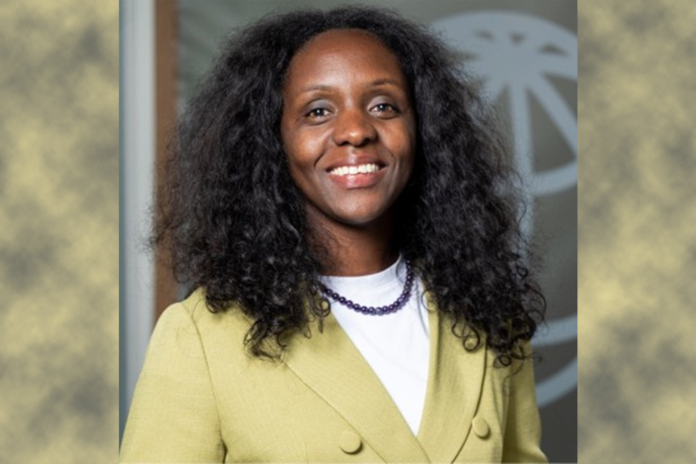
Dr. Clarisse Ingabire is a veterinarian, public health specialist, and international development expert with more than two decades of experience advancing animal health, food security, and sustainable livestock development across Africa and globally. She currently serves as Global Livestock Specialist at the World Bank, where she supports countries in strengthening livestock systems through investments in animal health, One Health, climate-smart agriculture, and sustainable livestock transformation.
Prior to joining the World Bank in 2023, Dr. Ingabire spent more than 11 years with the Food and Agriculture Organization of the United Nations (FAO), holding several leadership positions in animal health, emergency preparedness, and sustainable agricultural development. As Animal Production and Health Officer, she led sector analysis and policy advisory work for low-income countries, helping to improve livestock productivity, efficiency and resilience. Her contributions to FAO’s global development agenda were recognized in 2019 when she was named among the organization’s Top 100 Employees for her impact on the Zero Hunger programme.
Born and raised in Rwanda, Dr. Ingabire earned her Doctor of Veterinary Medicine degree from Cheikh Anta Diop University in Dakar, Senegal, and later completed a Master’s degree in Veterinary Public Health. Throughout her career, she has worked at the intersection of animal health, poverty reduction, disease control, climate resilience, and economic development, advocating for preventive approaches that protect both livelihoods and public health.
A passionate advocate for the One Health approach, Dr. Ingabire believes that healthy animals, healthy people, and healthy ecosystems are fundamentally interconnected. Her work continues to focus on building stronger veterinary systems, expanding access to vaccination, promoting sustainable livestock transformation, and helping countries unlock the economic and social benefits of resilient agricultural systems.
Where it all starts
When Dr. Clarisse Ingabire speaks about animal health, she does not start with vaccines, laboratories, or international development. She starts with cows.
Growing up in Rwanda, where cattle are deeply woven into culture and daily life, she saw firsthand how animals support families, livelihoods, and communities. Today, as Global Livestock Specialist at the World Bank, she works at the intersection of animal health, food security, climate resilience, and economic development.
Over a Coffee with the Expert conversation with the editorial team of Vaccines Beat for its second year anniversary issue, Dr. Ingabire reflected on a career that began almost by chance and evolved into a mission to transform livestock systems worldwide through prevention, investment, and One Health collaboration.
“I actually came into veterinary medicine randomly,” she laughs.
After receiving a scholarship to study abroad shortly after Rwanda’s recovery from the 1994 genocide, Dr. Ingabire enrolled in veterinary medicine in Senegal. What began as curiosity soon became a calling.
Studying in a Pan-African veterinary school exposed her to livestock systems across West Africa and to the realities faced by rural farming communities. Unlike veterinary training focused primarily on companion animals, veterinary medicine in many parts of Africa centers on livestock as a source of income, jobs, nutrition, and resilience.
That experience eventually led her to public health, international development, and later to the FAO, where she spent more than a decade working on disease prevention and emergency response. In 2023, she joined the World Bank, where she now supports countries in strengthening livestock systems through sustainable investment and One Health approaches.
Vaccination: One Health in Action
Central to Dr. Ingabire’s work is the One Health concept, which recognizes that the health of animals, humans, and the environment are inseparably linked. Whether addressing zoonotic diseases such as rabies and avian influenza, combating antimicrobial resistance, or improving food security through healthier livestock systems, One Health promotes collaboration across sectors to prevent health threats before they emerge.
Dr. Ingabire has been a strong advocate for integrating animal health interventions -including vaccination, surveillance, and biosecurity- into broader development strategies, demonstrating how investments in prevention can generate benefits for public health, economic growth, and environmental sustainability alike.
For Dr. Ingabire, animal vaccination represents one of the clearest examples of One Health in practice.
The benefits extend far beyond individual farms. Vaccination reduces disease outbreaks that can devastate livelihoods, disrupt trade, and threaten food security. It also helps prevent zoonotic diseases that can spread from animals to humans. Rabies remains one of her favorite examples.
“If we vaccinate dogs against rabies, we tremendously reduce rabies in humans, especially among children,” Dr. Ingabire says.
The lesson is simple: prevention saves lives, protects economies, and reduces suffering.
Why not Prevent
Despite the proven value of vaccination, scaling programs remains challenging, particularly in low- and middle-income countries. The obstacle, Dr. Ingabire explains, is rarely the vaccine itself.
“We already have the tools. We have manufacturers innovating every day. Financing remains the biggest constraint,” she asserts.
Vaccination campaigns require transportation, trained personnel, cold-chain systems, community engagement, and public awareness. In many rural areas, reaching livestock owners can be as challenging as producing the vaccine itself.
Trust is another critical factor. Just as vaccine hesitancy exists in human health, misconceptions can affect animal vaccination programs. Rumors linking vaccines to reproductive problems or other adverse outcomes can spread quickly and undermine years of progress.
Building confidence therefore requires more than science. It requires communication, local leadership, and sustained community engagement.
The hidden link between Vaccines and Climate Change
One of the most fascinating parts of the conversation was the connection between vaccination and climate resilience. At first glance, vaccines and climate change may seem unrelated. Dr. Ingabire argues the opposite.
She emphasizes the often-overlooked relationship between vaccination and climate resilience. Climate change is altering disease patterns, expanding the geographic range of animal pathogens and vectors, and increasing the vulnerability of livestock systems to outbreaks. By preventing disease, vaccination helps animals remain healthy and productive under increasingly stressful environmental conditions.
Healthier livestock produce more food with fewer resources, reducing the emissions intensity associated with meat, milk, and egg production. Vaccination therefore contributes not only to animal welfare and food security, but also to more sustainable and climate-smart livestock systems helping farmers adapt to climate change while protecting livelihoods, reducing losses, and supporting sustainable agricultural development.
She highlighted innovative approaches already being implemented, including integrated crop-livestock-forestry systems that improve soil health, enhance carbon sequestration, and increase productivity simultaneously.
For Dr. Ingabire, investing in animal health is ultimately an investment in resilience.
“Vaccination is a resilience tool,” she says. “It helps producers protect their animals and adapt to increasing pressures.”
Addressing Anti-Microbial Resistance before it starts
The conversation also explored one of the most pressing global health threats: antimicrobial resistance (AMR). Dr. Ingabire views vaccination as a powerful and ambitious intervention.
“Vaccination sits upstream. It addresses risks before they begin,” she claims.
Dr. Ingabire is a strong advocate for vaccination as a critical tool in the fight against AMR, one of the most pressing global health threats of our time. By preventing infectious diseases before they occur, vaccines reduce the need for antibiotics and other antimicrobial treatments in both animals and humans.
In livestock systems, effective vaccination programmes help farmers avoid disease outbreaks that would otherwise lead to widespread antimicrobial use, thereby slowing the emergence and spread of resistant pathogens.
“This preventive approach not only protects animal health and productivity but also safeguards the effectiveness of life-saving medicines for future generations, Dr. Ingabire points out.
Preventing disease reduces the need for antibiotics, helping slow the emergence of drug-resistant pathogens in both animals and humans. But vaccines alone are not enough.
Effective surveillance, stronger veterinary services, diagnostic capacity, biosecurity measures, and education all play critical roles in reducing inappropriate antimicrobial use. For Dr. Ingabire, the future lies in integrated systems that combine prevention, detection, and response across sectors.
“As part of a broader One Health strategy, vaccination -alongside improved biosecurity, surveillance, diagnostics, and veterinary services- plays a vital role in reducing the burden of AMR while supporting sustainable food production and public health,” she says.
The World Bank’s role: turning Science into Scale
As scientific organizations generate evidence and technical guidance, the World Bank brings a different strength to the table: scale.
While organizations such as the World Organisation for Animal Health (WOAH), FAO, WHO, universities, and research institutions generate scientific evidence, technical standards, and innovative solutions, the World Bank helps countries translate and implement these advances into high impact strategies through policy dialogue, financing, and investment.
“We have a catalytic role. We are able to scale,” asserts Dr. Ingabire.
By supporting governments in strengthening veterinary services, disease surveillance systems, laboratory networks, regulatory frameworks, and vaccination programmes, the World Bank creates the enabling environment needed for sustainable change.
The bank’s investments can help scale proven interventions across entire regions and countries, ensuring that scientific knowledge reaches farmers, communities, and livestock systems where it can deliver tangible benefits for food security, public health, economic growth, and climate resilience.
“That means supporting governments to strengthen veterinary services, improve disease surveillance, invest in laboratories, enhance regulatory frameworks, and create conditions that attract private-sector investment,” she comments.
It also means helping countries see livestock not simply as an agricultural sector, but as a driver of jobs, nutrition, food security, and economic growth.
Partnerships: the path forward
As the discussion drew to a close, one message emerged repeatedly: no single institution can solve these challenges alone.
Whether addressing zoonotic diseases, antimicrobial resistance, climate change, or food security, success depends on collaboration among governments, international organizations, researchers, manufacturers, veterinarians, producers, and communities.
For Dr. Ingabire, the future is not about proving that vaccination works. The evidence is already there. She asserts the challenge now is building the integrated systems, partnerships, and investments that allow vaccination to deliver its full potential for animals, people, and the planet.
Animal vaccination may very well be a test to assess how smart we are in public health.